Traditionalist Issues
 |
 |
 |
 |
 |
 |
 |
Dialogue Mass - CLXV
God’s Party Replaced by the People’s Party
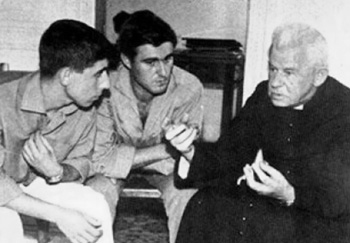
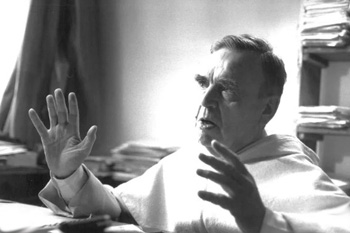
As space does not allow a more expansive treatment of the subject, only a few representative examples of politically-involved priests will be considered here. The most prominent among whom were Don Luigi Sturzo, founder of the Italian Popular Party, Fr. (later Cardinal) Joseph Cardijn, founder of the Young Christian Workers, Fr. Marie-Dominique Chenu, inspirer of the Worker-Priest Movement, and a few lesser-known lights dedicated to achieving similar revolutionary aims.
 They, too, can best be described as demagogues in the sense that they led campaigns and harangued crowds of predominantly young Catholics for the purposes of persuading them to engage collectively in activities that would be detrimental to the social and economic structures of Western society.
A striking feature of these priests – all leading animators of radical revolutionary politics – is that they were ideologically biased towards the far Left of the political spectrum. It was inevitable that socialist-leaning priests, like wolves in sheep’s clothing, would use their spiritual authority over the faithful to inculcate Left-wing theories in political and economic matters.
They taught that free-market Capitalism was a wicked invention of anti-God Enlightenment thinkers, specially designed to exploit the workers and keep them in penury – ignoring the historic evidence that it derived its rationale from the economic theories of the High Scholastic period in the Church. As a result, whole generations of Catholics gained the impression that not only free-market Capitalism but capitalists as well must be fought against and vanquished if “Social Justice” was to be achieved.
This was the toxic narrative in which Catholic Action was conceived. It was a fertile seed bed for internecine conflicts between priests and their confreres in the ministry; between priests and their parishioners; between different members of the laity as they fought among themselves over which point of the political spectrum the Church should occupy; between wage-earners and employers, factory workers and industrialists, peasants and landowners.
It was also the catalyst for the Marxist-inspired Liberation Theology movement which the Vatican II Popes were powerless to control. And it is still going on today in the “Social Justice” movement in many Dioceses around the world. Worst of all, the anti-capitalist theme was incorporated into papal encyclicals on social issues from John XXIII to Leo XIV, where it is often disguised under the generic title of “structures of sin” to be combated by good Catholics.
The priest-politician Fr. Luigi Sturzo (1871-1959)
From the time he was ordained to the priesthood, Fr. Sturzo pursued a full-time political career, to which he dedicated his entire priestly life. Given the evidence of his biography, one could accurately say that he lived and breathed politics.
Writing from his position of exile from Mussolini’s regime in 1941, he published an article entitled ‘My Political Vocation: What Drew an Italian Priest to Politics? 1 In it, he refers to his having witnessed during Easter 1895 the poverty and hardship endured by the inhabitants of a working-class district of Rome. It was an experience that turned him into a class warrior, a political agitator who would dedicate his life to social and economic reform, with the aim of improving the material well-being of the people.
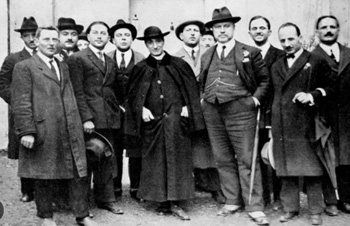 When he stepped into the political arena, he assumed the exercise of civil power, becoming Mayor of his home town of Caltagirone in Sicily, and founded the Italian Popular Party (PPI) in 1919, which was based on broadly Sillonist principles. These included independence from the hierarchy, separation of Church and State, radical social and economic reform, a non-denominational platform, belief in the universal brotherhood of man to be achieved by Christian Democracy and an alliance with the Socialist Party. Small wonder, then, that he was known in his lifetime as a “clerical socialist,” and that now he is being hailed as “a prophet for today” and “the saint of governments” by those of similar mindset who call for his canonization.2
Fr. Sturzo was skilled at rallying followers to his cause, a high-profile example being his speech at the Genoa Conference on April 30, 1922. On that occasion, it was reported that he “engaged in public speaking in which he urged the necessity of instituting a ‘political internationale’ founded on Christian ideals of love, brotherhood, tolerance, equity and justice.” 3
In other words, he believed in internationalism and world government, on the false grounds that the individual Nation State was a recipe for prejudice and war, and that only a commitment to non-confessional world Democracy would be capable of ensuring permanent peace. (That was exactly what Pius X had condemned with regard to the Sillon).
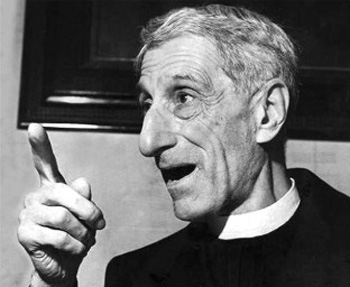 However, Pope Pius XI, who initially allowed Fr Sturzo the freedom to operate, had apparently underestimated the extremist nature of his activities as an anti-government agitator. Alarmed by threats of State retaliation against the Church, the Pope compelled him to resign as Party Secretary in 1923 and ordered him into exile. 4 In February 1924, he renewed the ban on priests belonging to political parties, personally and publicly condemned Fr. Sturzo’s idea of a PPI coalition with the socialists, 5 and the Party was dissolved in 1926.
But that was not the end of Fr. Sturzo’s unusual career. He travelled widely in Europe and the United States, influencing other clerics and lay people in assorted “Social Justice” movements with his distinctively Left-wing ideology. His career was only the beginning of a much wider, worldwide movement for the infiltration of Marxism in the Catholic Church.
Decades of Catholics have been misled by his confusion between religion and politics, which was evident in his belief that the Christian spirit could never be infused into society as long as Capitalism which supported the “propertied classes” continued in existence. 6
But tinkering with the economic system of a nation and altering class structures cannot produce virtuous citizens, as the acquisition of the Christian spirit is a fruit of Divine grace rather than the result of a political agenda. Sturzo was not a representative of Catholic doctrine. He was an opinion maker, a divisive politician, a fellow traveller on a mission to deliver a political message, an early example of a clerical demagogue of the kind that the Liturgical Movement was replete, as we shall see in the following article.
Continued

Above, Fr. Cardijn persuading young workers; below, Fr. Chenu spreading Progressivism
A striking feature of these priests – all leading animators of radical revolutionary politics – is that they were ideologically biased towards the far Left of the political spectrum. It was inevitable that socialist-leaning priests, like wolves in sheep’s clothing, would use their spiritual authority over the faithful to inculcate Left-wing theories in political and economic matters.
They taught that free-market Capitalism was a wicked invention of anti-God Enlightenment thinkers, specially designed to exploit the workers and keep them in penury – ignoring the historic evidence that it derived its rationale from the economic theories of the High Scholastic period in the Church. As a result, whole generations of Catholics gained the impression that not only free-market Capitalism but capitalists as well must be fought against and vanquished if “Social Justice” was to be achieved.
This was the toxic narrative in which Catholic Action was conceived. It was a fertile seed bed for internecine conflicts between priests and their confreres in the ministry; between priests and their parishioners; between different members of the laity as they fought among themselves over which point of the political spectrum the Church should occupy; between wage-earners and employers, factory workers and industrialists, peasants and landowners.
It was also the catalyst for the Marxist-inspired Liberation Theology movement which the Vatican II Popes were powerless to control. And it is still going on today in the “Social Justice” movement in many Dioceses around the world. Worst of all, the anti-capitalist theme was incorporated into papal encyclicals on social issues from John XXIII to Leo XIV, where it is often disguised under the generic title of “structures of sin” to be combated by good Catholics.
The priest-politician Fr. Luigi Sturzo (1871-1959)
From the time he was ordained to the priesthood, Fr. Sturzo pursued a full-time political career, to which he dedicated his entire priestly life. Given the evidence of his biography, one could accurately say that he lived and breathed politics.
Writing from his position of exile from Mussolini’s regime in 1941, he published an article entitled ‘My Political Vocation: What Drew an Italian Priest to Politics? 1 In it, he refers to his having witnessed during Easter 1895 the poverty and hardship endured by the inhabitants of a working-class district of Rome. It was an experience that turned him into a class warrior, a political agitator who would dedicate his life to social and economic reform, with the aim of improving the material well-being of the people.
Fr. Sturzo & members of the Italian Popular Party
Fr. Sturzo was skilled at rallying followers to his cause, a high-profile example being his speech at the Genoa Conference on April 30, 1922. On that occasion, it was reported that he “engaged in public speaking in which he urged the necessity of instituting a ‘political internationale’ founded on Christian ideals of love, brotherhood, tolerance, equity and justice.” 3
In other words, he believed in internationalism and world government, on the false grounds that the individual Nation State was a recipe for prejudice and war, and that only a commitment to non-confessional world Democracy would be capable of ensuring permanent peace. (That was exactly what Pius X had condemned with regard to the Sillon).
Fr. Luigi Sturzo
But that was not the end of Fr. Sturzo’s unusual career. He travelled widely in Europe and the United States, influencing other clerics and lay people in assorted “Social Justice” movements with his distinctively Left-wing ideology. His career was only the beginning of a much wider, worldwide movement for the infiltration of Marxism in the Catholic Church.
Decades of Catholics have been misled by his confusion between religion and politics, which was evident in his belief that the Christian spirit could never be infused into society as long as Capitalism which supported the “propertied classes” continued in existence. 6
But tinkering with the economic system of a nation and altering class structures cannot produce virtuous citizens, as the acquisition of the Christian spirit is a fruit of Divine grace rather than the result of a political agenda. Sturzo was not a representative of Catholic doctrine. He was an opinion maker, a divisive politician, a fellow traveller on a mission to deliver a political message, an early example of a clerical demagogue of the kind that the Liturgical Movement was replete, as we shall see in the following article.
Continued
- JLuigi Sturzo, Commonweal, vol. 23, 1941, pp. 537-540.
- The cause for Fr. Sturzo’s beatification was officially opened on March 23, 2002 when he was given the title “Servant of God.”
- New York Times, May 1, 1922.
- Fr. Sturzo settled in England where he wrote to Cardinal Bourne, Archbishop of Westminster, admitting that he had been forced to leave Italy by order of Pius XI. See ‘Sturzo to Cardinal Bourne November 15, 1926,’ in Francisco Piva and Francisco Malgeri, Vita di Luigi Sturzo, Rome: Cinque Lune, 1972, p. 291, n. 8. His supporters still claim that he resigned the leadership of the PPI and emigrated of his own accord.
- Hubert Jedin, Wolfgang Müller, John Dolan, History of the Church, vol. 10, The Church in the Modern Age, New York: Seabury Press, 1986, p. 50.
- Luigi Sturzo, Church and State, New York: Longmans, Green and Co., 1939, p. 537.
Posted September 14, 2026


______________________
______________________
 Volume I |
 Volume II |
 Volume III |
 Volume IV |
 Volume V |
 Volume VI |
 Volume VII |
 Volume VIII |
 Volume IX |
 Volume X |
 Volume XI |
 Special Edition |