Traditionalist Issues
 |
 |
 |
 |
 |
 |
 |
Dialogue Mass - CLXIII
After the Sillon:
Rise of the Clerical Demagogues
We have seen previously how Marc Sangnier, the lay leader of the Sillon, sought to obtain political power through the exercise of his skills as an orator. It would be entirely fitting to apply the term demagogue to him on account of the unprincipled way in which he influenced large swathes of Catholic youth by pandering to their prejudices and passions, particularly their desire for freedom and their love of novelty. Of significant interest was his confusion between religion and politics.
 Now we will turn our attention to an even worse phenomenon that came to the fore at the end of the 19th century – the emergence of groups of politically active priests, especially in France, Belgium and Italy, who were advocating radical measures to bring about social and economic change, often in alliance with Socialists. Commonly referred to as abbés démocrates for their promotion of “Christian Democracy,” they arranged national congresses for priests, addressed meetings and published their own weekly newspapers. Some even took up government or administrative posts, the better to advance their cause among the people. 1 Thus, militant cohorts of priests were in positions of power to draw the Catholic faithful into social revolution.
Pope Pius X dealt decisively with the threat to Catholic order by excommunicating some of the leaders, for example, Fr. Alfred Loisy in France and Fr. Romolo Murri in Italy. Once Pius X departed this life, however, his teaching on the true meaning of Catholic Action and his warnings about the incursion of Socialism into the Church via that means went unheeded – worse, they were even undermined by his immediate Successors. In practice, no one in Rome was prepared to face down and defeat the proponents of social Modernism as St. Pius X had done.
With the encouragement of Benedict XV and his Secretary of State, Cardinal Gasparri, Christian Democracy was welcomed back into the fold, while many politically Left-wing Catholic Action leaders, both clerical and lay, were given their day in the sun.
Incidentally, one of those leaders was Giorgio Montini, elected to the Italian Parliament in 1919, who imbued his son, the future Paul VI, with the condemned ideals of social Modernism which had deleterious effects both on the future of the Church as an institution and on the well-being of Catholic States.
The Popes after Pius X were less able (or less willing?) to control the situation with respect to clerical political activity, with the result that increasing numbers of the clergy forsook their divinely-appointed vocation as spiritual leaders of the flock entrusted to them, and took their inspiration instead from laymen, be it Marc Sangnier or Karl Marx.
Encounter between Catholic & Marxist currents
The Liturgical Movement was launched by Dom Lambert Beauduin in 1909 on a quasi-political platform. He saw the liturgy in terms of class struggle, i.e., the alleged oppression and exploitation by an “aristocratic elite” of clergy who had excluded the ordinary, humble and powerless laity from an active role in the liturgy.
This Marxist-style ideology has not only become the dominant theme of the pre-Vatican II Liturgical Movement, but it has also developed into a version of “Lay Lives Matter” Wokery – to paraphrase a modern slogan – that challenges and denounces the rights of the Hierarchy to give moral direction to the faithful in accordance with traditional Catholic doctrine.
Beauduin used the expression “the Mystical Body of Christ” to illustrate his ideal, but it was simply a metaphor for the class-based antagonism of Marxist ideology transposed on to the liturgical scene. This, in turn, inspired his revolutionary idea of linking the liturgy of the Church with social activism and with Ecumenism among religions.
He summed up the path of his own career in these telling words: “Under Leo XIII, I devoted myself to social action, under Pius X to the liturgy, and under Benedict XV to ecumenism.” 2
It is important to note the order of these steps in the evolution of his ideas. Social action came first both chronologically and in rank of importance, forming the bedrock of all his ideas on liturgy and Ecumenism.
Following in Beauduin’s footsteps, it seems that the Benedictines of the 20th century who initiated the Liturgical Movement were not interested in the liturgy per se, except only insofar as they could make use of it to further their agenda for change. But the idea that a Benedictine monastery such as Mont-César or Maria Laach could be a powerhouse of political activism and a pedagogical tool for liturgical novelty was as dangerous as it was subversive.
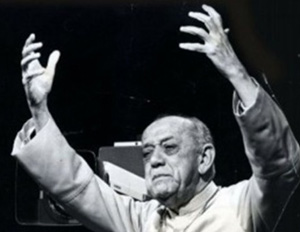 In the hands of the liturgical reformers, the doctrine of the Mystical Body became a rhetorical trope of antithesis or opposition to the Catholic Church. It adopted the characteristics of a Marxist-type slogan for the liberation of the laity from what they made out to be the injustice of an arbitrary and despotic form of “clericalism.”
Starting with Dom Lambert Beauduin’s active participation initiative for “corporate worship,” 3 the purpose of liturgy was subverted from its supernatural end and was made to serve as a tool for achieving political reform. The liturgical rites became a symbol of resistance to perceived injustice in contemporary society regarding inequality of wealth and social status.
Reformers who wanted to foment a Socialist revolution in the Church and society – which they knew to be incompatible with Catholicism – always resorted to special pleading, as in the case of Archbishop Hélder Câmara who stated: “My socialism is a special socialism, a socialism that respects the human person and goes back to the Gospels. My socialism is justice”. 4
“Social Justice,” it turns out, was whatever advanced their anti-capitalist agenda. But first they needed a religious-sounding slogan to give them credibility as Church leaders. This is exactly where the art of demagoguery becomes useful in popularizing slogans that sound good and denouncing phrases that do not appeal to modern ears, with the result that, in Orwellian fashion, everything good becomes bad, and everything bad becomes good.
The Mystical Body & Catholic Action
Well before Pius XII issued his Encyclical Mystici Corporis Christi (On the Mystical Body of Christ) in 1943, the sloganeering value of the Mystical Body had already been a going concern in the Liturgical Movement, especially in the area of Catholic Action. Fr. Louis Bouyer observed that the theology of the Mystical Body took on a life of its own and began to flourish when it came into contact with Catholic Action, and that it was especially influential in the French Worker-Priest Movement of the 1950s. 5 In other words, it became politicized among those who aimed to make revolutionary changes not only in the Church but also in social and economic structures.
It will soon become clear as we outline the work of the key personalities in the Liturgical Movement that their interest in the Church’s liturgy was chiefly motivated by what they saw as its potential to mobilize the Catholic population for social/political causes.
We will see later how Beauduin’s disciple, Dom Virgil Michel, brought this approach to the United States when he started the American version of the Liturgical Movement.
These ideas were predominantly of a Left-wing variety, anti-authority. anti-clerical and anti-capitalist, and included class struggle of workers against their employers, the poor against the rich, the weak against the powerful etc. Today this movement of Cultural Marxism would be looked upon as an example of “Wokery.”
Continued

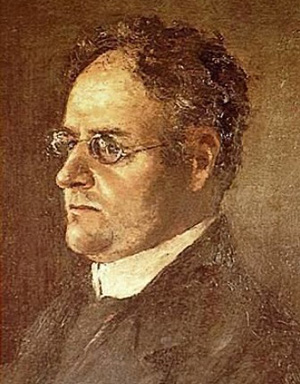
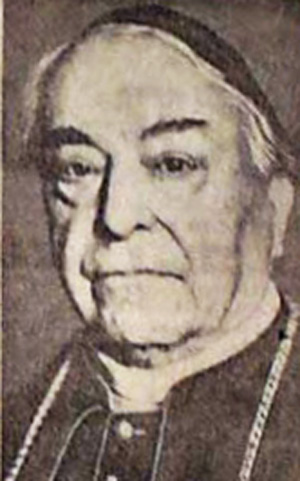
Above, Fr. Romolo Murri, condemned by St. Pius X; below, Card. Pietro Gasparri encouraged Catholic Action’s leftist leaders
Pope Pius X dealt decisively with the threat to Catholic order by excommunicating some of the leaders, for example, Fr. Alfred Loisy in France and Fr. Romolo Murri in Italy. Once Pius X departed this life, however, his teaching on the true meaning of Catholic Action and his warnings about the incursion of Socialism into the Church via that means went unheeded – worse, they were even undermined by his immediate Successors. In practice, no one in Rome was prepared to face down and defeat the proponents of social Modernism as St. Pius X had done.
With the encouragement of Benedict XV and his Secretary of State, Cardinal Gasparri, Christian Democracy was welcomed back into the fold, while many politically Left-wing Catholic Action leaders, both clerical and lay, were given their day in the sun.
Incidentally, one of those leaders was Giorgio Montini, elected to the Italian Parliament in 1919, who imbued his son, the future Paul VI, with the condemned ideals of social Modernism which had deleterious effects both on the future of the Church as an institution and on the well-being of Catholic States.
The Popes after Pius X were less able (or less willing?) to control the situation with respect to clerical political activity, with the result that increasing numbers of the clergy forsook their divinely-appointed vocation as spiritual leaders of the flock entrusted to them, and took their inspiration instead from laymen, be it Marc Sangnier or Karl Marx.
Encounter between Catholic & Marxist currents
The Liturgical Movement was launched by Dom Lambert Beauduin in 1909 on a quasi-political platform. He saw the liturgy in terms of class struggle, i.e., the alleged oppression and exploitation by an “aristocratic elite” of clergy who had excluded the ordinary, humble and powerless laity from an active role in the liturgy.
This Marxist-style ideology has not only become the dominant theme of the pre-Vatican II Liturgical Movement, but it has also developed into a version of “Lay Lives Matter” Wokery – to paraphrase a modern slogan – that challenges and denounces the rights of the Hierarchy to give moral direction to the faithful in accordance with traditional Catholic doctrine.
Beauduin used the expression “the Mystical Body of Christ” to illustrate his ideal, but it was simply a metaphor for the class-based antagonism of Marxist ideology transposed on to the liturgical scene. This, in turn, inspired his revolutionary idea of linking the liturgy of the Church with social activism and with Ecumenism among religions.
He summed up the path of his own career in these telling words: “Under Leo XIII, I devoted myself to social action, under Pius X to the liturgy, and under Benedict XV to ecumenism.” 2
It is important to note the order of these steps in the evolution of his ideas. Social action came first both chronologically and in rank of importance, forming the bedrock of all his ideas on liturgy and Ecumenism.
Following in Beauduin’s footsteps, it seems that the Benedictines of the 20th century who initiated the Liturgical Movement were not interested in the liturgy per se, except only insofar as they could make use of it to further their agenda for change. But the idea that a Benedictine monastery such as Mont-César or Maria Laach could be a powerhouse of political activism and a pedagogical tool for liturgical novelty was as dangerous as it was subversive.
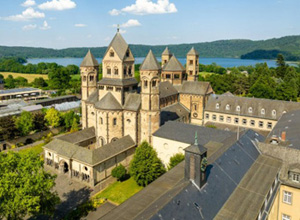
Above, Maria Laach Abbey, Germany, center of the litrugical reforms; below, Arch. Helder Camara, a socialist demagogue
Starting with Dom Lambert Beauduin’s active participation initiative for “corporate worship,” 3 the purpose of liturgy was subverted from its supernatural end and was made to serve as a tool for achieving political reform. The liturgical rites became a symbol of resistance to perceived injustice in contemporary society regarding inequality of wealth and social status.
Reformers who wanted to foment a Socialist revolution in the Church and society – which they knew to be incompatible with Catholicism – always resorted to special pleading, as in the case of Archbishop Hélder Câmara who stated: “My socialism is a special socialism, a socialism that respects the human person and goes back to the Gospels. My socialism is justice”. 4
“Social Justice,” it turns out, was whatever advanced their anti-capitalist agenda. But first they needed a religious-sounding slogan to give them credibility as Church leaders. This is exactly where the art of demagoguery becomes useful in popularizing slogans that sound good and denouncing phrases that do not appeal to modern ears, with the result that, in Orwellian fashion, everything good becomes bad, and everything bad becomes good.
The Mystical Body & Catholic Action
Well before Pius XII issued his Encyclical Mystici Corporis Christi (On the Mystical Body of Christ) in 1943, the sloganeering value of the Mystical Body had already been a going concern in the Liturgical Movement, especially in the area of Catholic Action. Fr. Louis Bouyer observed that the theology of the Mystical Body took on a life of its own and began to flourish when it came into contact with Catholic Action, and that it was especially influential in the French Worker-Priest Movement of the 1950s. 5 In other words, it became politicized among those who aimed to make revolutionary changes not only in the Church but also in social and economic structures.
It will soon become clear as we outline the work of the key personalities in the Liturgical Movement that their interest in the Church’s liturgy was chiefly motivated by what they saw as its potential to mobilize the Catholic population for social/political causes.
We will see later how Beauduin’s disciple, Dom Virgil Michel, brought this approach to the United States when he started the American version of the Liturgical Movement.
These ideas were predominantly of a Left-wing variety, anti-authority. anti-clerical and anti-capitalist, and included class struggle of workers against their employers, the poor against the rich, the weak against the powerful etc. Today this movement of Cultural Marxism would be looked upon as an example of “Wokery.”
Continued
- Robert Byrnes, “The French Christian Democrats in the 1890s: Their Appearance and Their Failure,” The Catholic Historical Review, vol. 36, n. 3, October 1950.
- Albert Verdoodt, Les colloquies œcuméniques de Chevetogne (1942-1983) et la réception par l’Eglise catholique des charismes d’autres communions chrétiennes (The Ecumenical Conferences at Chevetogne (1942-1983) and the Catholic Church’s Welcoming of the Charisms of other Christian Communities), Chevetogne: Éditions de Chevetogne, 1986, p. 39.
- See Volumes 1 and 2 of this series.
- Oriana Fallaci, Interview with History, London: Michael Joseph, 1976, p. 297.
- Louis Bouyer, ‘Où en est la théologie du corps mystique?’ (What is the current situation with the theology of the Mystical Body?), Revue des Sciences Religieuses, vol. 22, 1948, p. 323.
Posted July 15, 2026


______________________
______________________
 Volume I |
 Volume II |
 Volume III |
 Volume IV |
 Volume V |
 Volume VI |
 Volume VII |
 Volume VIII |
 Volume IX |
 Volume X |
 Volume XI |
 Special Edition |