Women & Men in Society
 |
 |
 |
 |
 |
 |
 |
Dignifying the Man – VII
Husbands Should Develop Family Traditions
In his work on the family, Msgr. Henri Delassus explains the importance of family traditions in preserving the good customs of Catholic Civilization: “There was once a widespread idea, an almost religious idea, associated with the expression family traditions, understood in its best sense, which designated a heritage of truths and virtues, in whose bosom were formed characters that forged the long life and grandeur of a house.”
This sense of traditions imbued with truth and virtue is what has been lost in today’s fast paced, media-centered life.
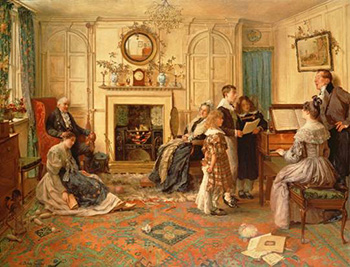 In the past, every night after the day’s work was over, good Catholic families would gather together to tell stories, play music and engage in wholesome activities that inspired a love of the Faith. Culture was developed in the home naturally with conversation, music and a convivium that a centralized news station or entertainment company could never replace.
Today, if a traditional family attempts to rebuild this joyful atmosphere, it is very likely the mother who is the one to take the lead. Since men have become quick to defer to the desires and judgments of their wives, they usually prefer not to make the effort to research or plan traditions and activities.
Even if he steps in at times to do his part, the modern husband will likely plan only the more physical and practical activities, leaving the liturgical ceremonies and festive outings to his wife. This is another example of how the traditional mother becomes the de facto decision maker in the home. The one who controls the social life controls the family…
Going into nature
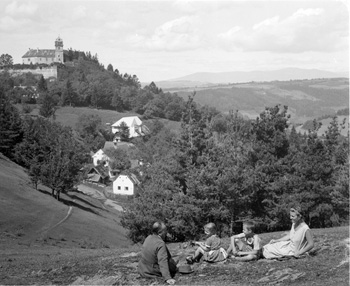
Fathers should plan to take their families out into nature. Since the father is the protector of the family, he should be the one to lead family outings into nature to fulfill the archetypal role his wife and children should see in him. On these regular outings, he should use this opportunity to inspire the family with stories of heroes or great warriors from history or of the saints who often endured long journeys on foot for God’s glory. One can find such stories on the TIA site here, here and mainly here.
 The boys can be given special outfits for these walks to build a love of militancy and ceremony in their souls. Perhaps a son could have a knight's toy sword or a soldier's plastic pistol and be given the mission of watching for animals in the bushes. Or he can be tasked with the job of cartographer to map out the pathway in a small notebook and report on any interesting things he finds.
The natural femininity of daughters can be cultivated by asking them to collect flowers or practice their singing as they walk. They will find it enjoyable to make a charming picnic table, decorating it with the flowers they find, and setting up activities planned for the outing. Certainly, the wife can help in the planning, but she should always be ready to defer to her spouse’s wishes.
Reading aloud
Reading books aloud should be a standard home activity of all families. Both the father and the mother should read good books that inspire virtue and a spirit of the marvelous and adventure in their children with a certain time each evening set aside for this reading. The children will be far more likely to remember these stories that inspire heroism and virtue when they are read by loving parents whose voices represent the voice of God and Our Lady in the home.
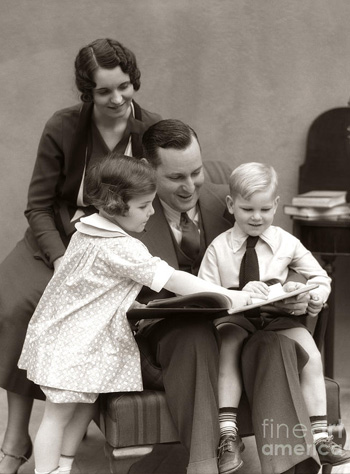 In the past, every family had a story-teller, who would not just read stories but come up with his own. A faher might create a family whose adventures mirror those of her own family, with endings that end in a moral to be remembered. I had a friend whose father would spin ghost stories or great adventures tales with Thomas and Timothy who would find their way into and out of the most strange and marvelous calamities.
When the children are old enough to read on their own, allow them the opportunity to read aloud to the family to develop their self-confidence and oratory skills, something that is almost lost today. It is also a way to train the voice: for the sons to have a strong masculine tone, for the daughters to develop a softer, sweeter and expressive voice.
Here, also the father takes the lead: “Joseph, do not whine. Speak like a man.” Or, “Theresa, not so loud please. Let us learn to modulate your voice and not just blurt out words like bullets from a firing squad.”
Later, by adding voices and pacing to the story, they will develop the charm of a storyteller and become a blessing for their family and others to hear.
Other activities at home
In the past, before the radio and phonograph, music was made and played in the home. Those with means would develop their children’s talents, but in every home a harmonic or homemade lute accompanied song.
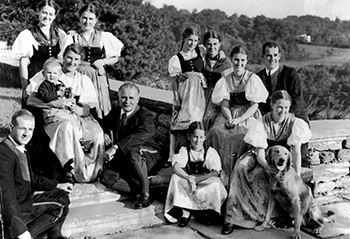 A father should encourage his children to perform for the family and others. Today we often see a child bashfully refuse, fearful of making mistakes or timid to appear. Of course, mistakes should not be ridiculed but should be understood as a stimulus to practice more and overcome shyness or pride. The Trapp Family singers were the result of much practice and discipline; a kind of internal impulse in the family stimulated them to sing and perform which ended by giving joy not only to themselves but many others.
Fathers as well as mothers should encourage the love of art in their children. If the children have an artistic spirit, then time set aside to paint, sculpt or design can be part of recreation time. Only the best of the pictures should be displayed, to encourage them to strive for perfection.
Time can be set aside to enjoy large-print art books with beautiful photographs of paintings, architecture and design. For example, when a father explains the difference between a Baroque cathedral versus a Gothic cathedral, he not only trains the artistic eye of the children but gives them an appreciation for the unique qualities of the various epochs of Christendom. When he explains that the medieval gothic arch is nobler than the roman arch, he begins to teach them distinctions and give them a criteria that can produce the artists and architects of the Reign of Mary.
Children have always enjoyed role-playing their heroes. Short plays with charming costumes encourage in them a sense of wonder and joy, offering a diversion different from watching videos and silly cartoons. Often it is the mother who writes the plays, but when the father steps in to share his talents the stories take on a more masculine and militant tone. Just as praying before a statue can guide our prayers more easily to God by engaging our senses, plays can better guide a child’s understanding of saints and virtues because they step into the role of the heroic man or woman.
Developing traditions
For activities to have a lasting impact on the family, they need to become traditions that represent the soul of the family. The simplest way to do this is to develop routines that give structure to these activities.
For example, if the family designates one day a week as the “performance day” where the children show the family what they learned, it becomes a tradition. For example, an older daughter might plan a short song program with her younger siblings for a “performance day.” An older son might choreograph a military routine with his younger brothers. Later they will reminisce about this time and say, “Do you remember how every Wednesday, we would play before the family.” It became a tradition to be recalled and treasured.
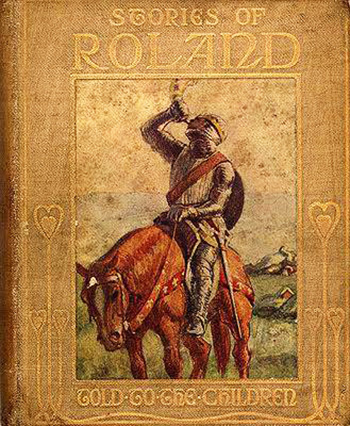
The activities of each family will develop naturally, under the leadership of the father. A young son who loves strategy could eagerly await each Monday knowing that this was “chess night.” Certain stories can be set aside each year to be read during a specific season: The Song of Roland to be read every Summer to connect the powerful heat of summer days with the flaming courage of Roland, while the The Autobiography of St Therese can be read in the Winter to connect the cold winter to her Little Way of sacrifice and prayer.
 Perhaps a dangerous or difficult hiking trail is reserved for Lent to remind the family of the need for sacrifice, while an easier hike could be enjoyed during the Christmas season.
The ideas are endless, and the angels will assist in inspiring the head of the house to set traditions that fit the tone and rhythm of his home. Then, routine, stability and identity begin to grow. The family will become more secure in their daily lives and the inner light of the family will shine more brilliantly in their hearts.
Traditions in the family home become the traditions of Christendom. When a family with a tangible, primordial light maintains a good and holy tradition for others to see and admire, they can create a movement that stirs a whole village or an entire region of people.
Msgr. Delassus stresses the importance that the men in the family should develop and maintain its spirit and uprightness: “A family wherein virtuous men succeed one another is a family of good men. This succession of virtues takes place when the family goes back to a good and honest source, because a good principle produces things similar to itself. Therefore, when there is a man in a family so identified with the good that his goodness communicates itself to his offspring for many generations, from this man a virtuous family necessarily derives.”
Fathers must reassume this responsibility and lead the family traditions. This will not only help the wife to be more feminine but also more submissive as she realizes her husband will make the final decision. The children’s love of their family will blossom and they will have warm memories all their lives of the customs and traditions practiced in their home.
To be continued

This sense of traditions imbued with truth and virtue is what has been lost in today’s fast paced, media-centered life.
Families used to gather together in the evenings for recreation & convivium
Today, if a traditional family attempts to rebuild this joyful atmosphere, it is very likely the mother who is the one to take the lead. Since men have become quick to defer to the desires and judgments of their wives, they usually prefer not to make the effort to research or plan traditions and activities.
Even if he steps in at times to do his part, the modern husband will likely plan only the more physical and practical activities, leaving the liturgical ceremonies and festive outings to his wife. This is another example of how the traditional mother becomes the de facto decision maker in the home. The one who controls the social life controls the family…
Going into nature
Fathers should plan to take their families out into nature. Since the father is the protector of the family, he should be the one to lead family outings into nature to fulfill the archetypal role his wife and children should see in him. On these regular outings, he should use this opportunity to inspire the family with stories of heroes or great warriors from history or of the saints who often endured long journeys on foot for God’s glory. One can find such stories on the TIA site here, here and mainly here.
A family outing in Vienna in the 1930s
The natural femininity of daughters can be cultivated by asking them to collect flowers or practice their singing as they walk. They will find it enjoyable to make a charming picnic table, decorating it with the flowers they find, and setting up activities planned for the outing. Certainly, the wife can help in the planning, but she should always be ready to defer to her spouse’s wishes.
Reading aloud
Reading books aloud should be a standard home activity of all families. Both the father and the mother should read good books that inspire virtue and a spirit of the marvelous and adventure in their children with a certain time each evening set aside for this reading. The children will be far more likely to remember these stories that inspire heroism and virtue when they are read by loving parents whose voices represent the voice of God and Our Lady in the home.
The timeless joy of storytelling
When the children are old enough to read on their own, allow them the opportunity to read aloud to the family to develop their self-confidence and oratory skills, something that is almost lost today. It is also a way to train the voice: for the sons to have a strong masculine tone, for the daughters to develop a softer, sweeter and expressive voice.
Here, also the father takes the lead: “Joseph, do not whine. Speak like a man.” Or, “Theresa, not so loud please. Let us learn to modulate your voice and not just blurt out words like bullets from a firing squad.”
Later, by adding voices and pacing to the story, they will develop the charm of a storyteller and become a blessing for their family and others to hear.
Other activities at home
In the past, before the radio and phonograph, music was made and played in the home. Those with means would develop their children’s talents, but in every home a harmonic or homemade lute accompanied song.
The Trapp family on their arrival in Pennsylvania in 1939
Fathers as well as mothers should encourage the love of art in their children. If the children have an artistic spirit, then time set aside to paint, sculpt or design can be part of recreation time. Only the best of the pictures should be displayed, to encourage them to strive for perfection.
Time can be set aside to enjoy large-print art books with beautiful photographs of paintings, architecture and design. For example, when a father explains the difference between a Baroque cathedral versus a Gothic cathedral, he not only trains the artistic eye of the children but gives them an appreciation for the unique qualities of the various epochs of Christendom. When he explains that the medieval gothic arch is nobler than the roman arch, he begins to teach them distinctions and give them a criteria that can produce the artists and architects of the Reign of Mary.
Children have always enjoyed role-playing their heroes. Short plays with charming costumes encourage in them a sense of wonder and joy, offering a diversion different from watching videos and silly cartoons. Often it is the mother who writes the plays, but when the father steps in to share his talents the stories take on a more masculine and militant tone. Just as praying before a statue can guide our prayers more easily to God by engaging our senses, plays can better guide a child’s understanding of saints and virtues because they step into the role of the heroic man or woman.
Developing traditions
For activities to have a lasting impact on the family, they need to become traditions that represent the soul of the family. The simplest way to do this is to develop routines that give structure to these activities.
For example, if the family designates one day a week as the “performance day” where the children show the family what they learned, it becomes a tradition. For example, an older daughter might plan a short song program with her younger siblings for a “performance day.” An older son might choreograph a military routine with his younger brothers. Later they will reminisce about this time and say, “Do you remember how every Wednesday, we would play before the family.” It became a tradition to be recalled and treasured.
The activities of each family will develop naturally, under the leadership of the father. A young son who loves strategy could eagerly await each Monday knowing that this was “chess night.” Certain stories can be set aside each year to be read during a specific season: The Song of Roland to be read every Summer to connect the powerful heat of summer days with the flaming courage of Roland, while the The Autobiography of St Therese can be read in the Winter to connect the cold winter to her Little Way of sacrifice and prayer.
Scenes from The Song of Roland
are formative for children
The ideas are endless, and the angels will assist in inspiring the head of the house to set traditions that fit the tone and rhythm of his home. Then, routine, stability and identity begin to grow. The family will become more secure in their daily lives and the inner light of the family will shine more brilliantly in their hearts.
Traditions in the family home become the traditions of Christendom. When a family with a tangible, primordial light maintains a good and holy tradition for others to see and admire, they can create a movement that stirs a whole village or an entire region of people.
Msgr. Delassus stresses the importance that the men in the family should develop and maintain its spirit and uprightness: “A family wherein virtuous men succeed one another is a family of good men. This succession of virtues takes place when the family goes back to a good and honest source, because a good principle produces things similar to itself. Therefore, when there is a man in a family so identified with the good that his goodness communicates itself to his offspring for many generations, from this man a virtuous family necessarily derives.”
Fathers must reassume this responsibility and lead the family traditions. This will not only help the wife to be more feminine but also more submissive as she realizes her husband will make the final decision. The children’s love of their family will blossom and they will have warm memories all their lives of the customs and traditions practiced in their home.
To be continued


Posted September 4, 2026
______________________
______________________
 |
 |
 |
 |
 |
 |