Talks with Jan
 |
 |
 |
 |
 |
 |
 |
The SSPX: Excommunications,
Excuses & Tricks
My friend Jan recently asked the same question that several other friends have posed to me since the SSPX’s consecration of four bishops on July 1 and the subsequent
decree of excommunication published against it by the Holy See on July 2.
 Jan asked: What is your position? You can see all the heretical things Popes Francis and now Leo XIV are doing, especially with the new Synodal Church they are trying to establish. So, do not faithful Catholics have the right to resist? Wasn’t the action made by necessity, which thus makes the excommunication invalid?
I had already sent Jan the article Mr. Atila Guimarães wrote in February 2026 stating the position of TIA on the consecrations and warning readers not to follow the SSPX leaders into the looming schism. Nothing has changed in our stance. Here I will try to expand a bit on his well-reasoned arguments to help my friend Jan understand the situation. It is not my intent to judge persons – this or that follower of SSPX – but to bring a little clarity to a foggy environment and to confirm our stance.
Mixing up the Powers of Governance & Teaching
As most Catholics know, the Pope has three powers: the power of governance (or jurisdiction), the power of teaching and the power of sanctification (or orders). These powers allow him to lead and govern the Church, define doctrines regarding Faith and Morals, and administer the Sacraments effectively.
 Let us look at the papal power ofr teaching first. When a Pope teaches a wrong doctrine, he can be respectfully resisted by Catholics, which is what TIA has been doing since it was founded in 1997 and which it continues relentlessly to do. We as lay men and women have the right to question doctrines and actions that clash with the Holy Church’s two millennium Magisterium and to ask Church authorities – even the Pope – to explain how those teachings and actions do not contradict the previous Magisterium. If they do not explain, we resist the new teachings and keep the perennial ones.
The SSPX also had the right to do this. When Pope Provost wrote the Society on June 30 asking them to not proceed with that “sin of extreme gravity,” they had the right to respond and enter into a public dialogue with him on their opposition to the bad teachings of Vatican II. Why did they not use this opportunity to start a public dispute?
Likewise, when some months earlier in February 2026, Card. Victor Manuel Fernandez, Prefect of the Dicastery for the Doctrine of the Faith, addressed them asking to enter ”a path of dialogue” on the condition that episcopal consecrations be suspended, they had the right to do this. It was another tremendous opportunity to start a public debate. Instead, their superiors let the opportunity pass and summarily affirmed a dialogue or a debate was not feasible since it would be impossible to reach a common agreement on certain parts of Vatican II.
Independent of any possible agreement, the SSPX could have brought these issues to the table in a public way and, with a serious study and debate, made many more Catholics aware of the ambiguities and contradictions in the Council documents and put the Vatican in a very uncomfortable position. The door was opened for a public debate, but the SSPX slammed it shut with an arrogance that surprised and shocked me. A missed opportunity for a polemic and an appallingly arrogant response to the Pontiff whose supreme authority the SSPX claimed to accept.
The Power of Governance
The power of governance, or jurisdiction, gives the Pope full, supreme and universal power over the entire Church – a power he can always exercise freely. This power gives him the exclusive right to appoint Bishops, convene councils, and be the final court of appeal in ecclesiastical matters. It is not superfluous to stress that this is a dogma of Faith – the Petrine Primacy – which Catholics are obliged to profess under penalty of losing their faith. (Vatican I, Pastor Aeternus; first three chapters)
No Catholic can deny the power of jurisdiction – in this case, the Pope’s right to make Bishops – without breaking the unity of the Church and creating internal chaos. That is why when an individual or a group of persons declares that he or they will make his or their own bishops without papal permission, he or they perform ipso facto a schismatic act.
Those persons, even if they claim to be acting for the good of the Church, fall into schism. Those persons, even if they assert a thousand cases of abuses and false teachings of Leo XIV, are mixing up the power of teaching – which can be resisted – with the power of jurisdiction – which cannot be challenged. In short, those persons, even if they claim they still acknowledge the Pope as Pope, by their action deny his authority to govern, and thus place themselves outside the Church.
 Let us set aside emotions and sophist arguments in such a clear-cut matter. “But they did this out of charity for souls.” “But the Pope is teaching heresy and bad doctrine.” Papal jurisdiction is set outside of doctrinal and moral disagreements. For whatever reason – even the lofty cause of charity – one cannot challenge the Petrine Primacy.
For making bishops without papal approval, the automatic punishment is excommunication – something the SSPX was fully aware of and chose to challenge. Bishop Bernard Fellay told a congregation at St. Mary’s Kansas in April that he and probably all of them “would be excommunicated, declared schismatic.” His glib reaction, “But whatever… it’s not the end.”
His flippant response was applauded by many as courage, but for me, it was a bold arrogance and disregard for the Petrine Primacy. Excommunication is a serious matter, to be avoided at all costs, not something to joke about, especially when, as in this case, the excommunication covers not only the bishops and priests, but all the members who explicitly adhere to their action.
On the topic of the power of jurisdiction, let me be crystal clear: If the SSPX accepts the Pope as valid and professes his power of jurisdiction, it voluntarily and arrogantly entered into schism. If it pretends that the automatic excommunication is not valid for the SSPX, it de facto became sede-vacantist and established an Episcopal Church severed from Rome.
The question of necessity
This leads naturally to your second question on the case of necessity. The SSPX claims they found themselves in a case of necessity and obeyed the “call of God” with the consecrations. The Society argues the consecrations were vital to survival, to ordain traditional priests and to safeguard the sacraments.
This affirmation is faulty. Before the consecrations, the SSPX had two bishops, both in their 60s and healthy. Two bishops are sufficient to administer the ordinations of priests. It would be convenient to have more bishops, certainly, but not necessary. A problem may exist in the future if one bishop dies and the other is elderly, but would it not be better to wait for this crisis than to peremptorily announce, as the SSPX did in February, that they were proceeding to make bishops without papal approval?
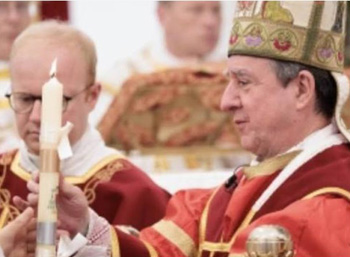 The next question arises: But how can two bishops travel incessantly throughout the world making all the necessary confirmations of the SSPX? That answer is simple. A bishop may grant a priest the faculty to administer confirmations if necessity or pastoral reasons require it (1983 Code of Canon Law, Canon 884 §1). It would be a simple matter for the two SSPX bishops to delegate that authority to trusted priests of their organization. It would be more convenient, of course, to have more bishops, but not a necessity.
I believe that prior to its announcement that it would make its own bishops, the SSPX was in a very good situation: The 1988 excommunications had been lifted by Benedict XVI (2009); the permissions for hearing confession (2015) and officiate at marriages (2017) were restored by Francis. It was in the position to grow and exercise increasing influence inside the Church.
For the sake of maintaining the unity of the Church, it would have been better to suffer the inconveniences of having only two bishops rather than entering officially into a schism and becoming essentially an Episcopal Church. It would have also been a position of charity for their faithful, rather than to ask them to jump with them into official schism and break with the Catholic Church.
Other contradictions
In a 28-page explanatory statement of July 8, 2026, the SSPX rejected the recent Vatican excommunications as unjust and invalid. Yet shortly after the supposedly “invalid” excommunication that they instructed their followers to disregard, they submitted an appeal on July 11, 2026, to the Vatican to reconsider its decree of excommunication.
First, if the SSPX, as its superiors claim, do not recognize the excommunication, why are they trying to appeal what it does not not even acknowledge as valid? It is contradictory.
Second, it is only explicable, I believe, if it is seen as a trick, a means to appease the consciences of many of the SSPX concerned members, who are being told that the penalty of excommunication is suspended during the appeal process.
Third, this is not the case. While an appeal to Holy See decrees is allowed by the law in some cases, the penalty in the case of SSPX is not lifted during the process.
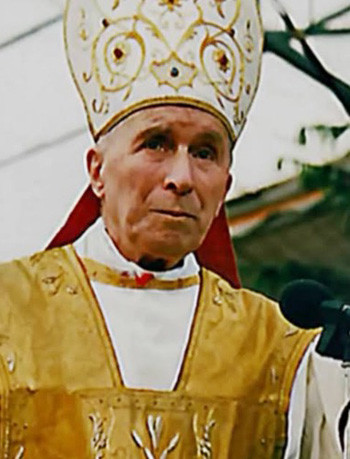 Indeed, there are two types of punitive decrees by the Holy See: One type is when the decree constitutes the penalty for a crime: For example, a person is defined as a heretic because he denies the Holy Trinity. This person can appeal against a constitutive decree, because the sentence of the judge can be unjust for a variety of reasons.
Another type is when the decree only declares the penalty as in the case of the latae sententiae excommunications: For example, a man who enters Freemasonry is automatic excommunicated according to the 1917 Code of Canon Law. When his adhesion to such a secret society is known publicly, the Holy See may issue a declarative decree of his excommunication.
No one can appeal against a declarative decree because the penalty had been previously imposed automatically when the person committed the crime. That is, the penalty can only be lifted if the offending person repents and makes reparation for his criminal act.
In the case of the SSPX, the decree of the Holy See of July 2, 2026, was of this latter type: It was a declarative decree. It informed the public of the automatic excommunication and explained the ways for the guilty to return to the communion of the Church. If the SSPX superiors do not retract from what they did, there is no appeal possible. To appeal from a declarative decree is nonsensical.
Since the SSPX is not repenting from the act they made that caused the schism – the consecration of the bishops – juridically there is nothing to debate here.
I believe the SSPX authorities are aware of these canonical precisions. Therefore, I can only conclude a bad will on their part to fool the faithful and keep them in their fold.
Bad Popes & Resistance
We have had bad Popes before in History. Here is not the place to delve into it. The Conciliar Popes – not just Francis and Leo XIV – have all been guilty of blasphemy, heresies, bad morals; and the pace of these offenses has been ever escalating.
However, while resisting their bad doctrine, we cannot deny their authority to make bishops and govern the Church. We are called to fight to retake the Church’s fortress so that the banner of Christ and His Holy Mother can fly proudly and freely over her once again, and even in a more marvelous way, since we count on a supernatural intervention from Heaven to achieve this.
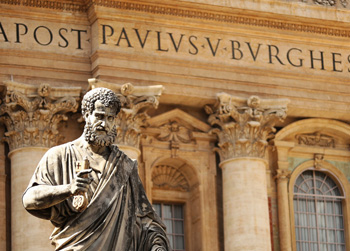 But let us not step outside of that Bark of Peter to make this fight, under the pretext that it is being steered by a bad Pope. This is, sadly, what the SSPX has done with their act of defiance.
Besides the enormous increase of confusion it has created among traditionalists, another of its negative fruits, I believe, is to impel many Catholics toward the sedevacantist position (e.g. Papa Stronsey Monks) and Benevacantism (LifeSite News). It would not surprise me to see more “isms” and splits to come.
I close with the words of Sister Lucy to Fr. Augustin Fuentes in her last public interview in 1957. She affirmed that Our Lady told her that we were entering the Latter Times of the world and that God was giving us two last remedies: the Holy Rosary and devotion to the Immaculate Heart of Mary.
No matter what persecutions will come, we have these last two remedies and we will stay inside the Church fighting to expel the usurpers, never giving them the false idea that they became the owners of our Holy Mother Church.

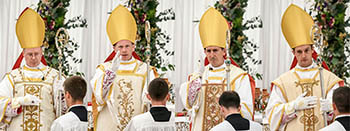
July 1, 2026: Four new bishops consecrated
without papal approval
I had already sent Jan the article Mr. Atila Guimarães wrote in February 2026 stating the position of TIA on the consecrations and warning readers not to follow the SSPX leaders into the looming schism. Nothing has changed in our stance. Here I will try to expand a bit on his well-reasoned arguments to help my friend Jan understand the situation. It is not my intent to judge persons – this or that follower of SSPX – but to bring a little clarity to a foggy environment and to confirm our stance.
Mixing up the Powers of Governance & Teaching
As most Catholics know, the Pope has three powers: the power of governance (or jurisdiction), the power of teaching and the power of sanctification (or orders). These powers allow him to lead and govern the Church, define doctrines regarding Faith and Morals, and administer the Sacraments effectively.
Catholics have the right to respectfully resist bad doctrine; see our Resistance Statement here
The SSPX also had the right to do this. When Pope Provost wrote the Society on June 30 asking them to not proceed with that “sin of extreme gravity,” they had the right to respond and enter into a public dialogue with him on their opposition to the bad teachings of Vatican II. Why did they not use this opportunity to start a public dispute?
Likewise, when some months earlier in February 2026, Card. Victor Manuel Fernandez, Prefect of the Dicastery for the Doctrine of the Faith, addressed them asking to enter ”a path of dialogue” on the condition that episcopal consecrations be suspended, they had the right to do this. It was another tremendous opportunity to start a public debate. Instead, their superiors let the opportunity pass and summarily affirmed a dialogue or a debate was not feasible since it would be impossible to reach a common agreement on certain parts of Vatican II.
Independent of any possible agreement, the SSPX could have brought these issues to the table in a public way and, with a serious study and debate, made many more Catholics aware of the ambiguities and contradictions in the Council documents and put the Vatican in a very uncomfortable position. The door was opened for a public debate, but the SSPX slammed it shut with an arrogance that surprised and shocked me. A missed opportunity for a polemic and an appallingly arrogant response to the Pontiff whose supreme authority the SSPX claimed to accept.
The Power of Governance
The power of governance, or jurisdiction, gives the Pope full, supreme and universal power over the entire Church – a power he can always exercise freely. This power gives him the exclusive right to appoint Bishops, convene councils, and be the final court of appeal in ecclesiastical matters. It is not superfluous to stress that this is a dogma of Faith – the Petrine Primacy – which Catholics are obliged to profess under penalty of losing their faith. (Vatican I, Pastor Aeternus; first three chapters)
No Catholic can deny the power of jurisdiction – in this case, the Pope’s right to make Bishops – without breaking the unity of the Church and creating internal chaos. That is why when an individual or a group of persons declares that he or they will make his or their own bishops without papal permission, he or they perform ipso facto a schismatic act.
Those persons, even if they claim to be acting for the good of the Church, fall into schism. Those persons, even if they assert a thousand cases of abuses and false teachings of Leo XIV, are mixing up the power of teaching – which can be resisted – with the power of jurisdiction – which cannot be challenged. In short, those persons, even if they claim they still acknowledge the Pope as Pope, by their action deny his authority to govern, and thus place themselves outside the Church.
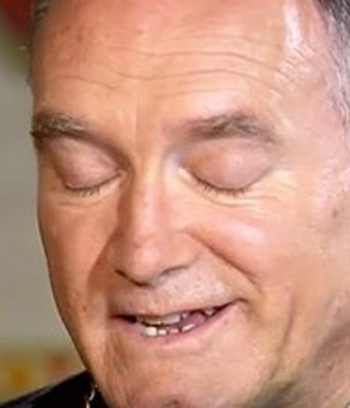
A glib response to the threat of excommunication...
For making bishops without papal approval, the automatic punishment is excommunication – something the SSPX was fully aware of and chose to challenge. Bishop Bernard Fellay told a congregation at St. Mary’s Kansas in April that he and probably all of them “would be excommunicated, declared schismatic.” His glib reaction, “But whatever… it’s not the end.”
His flippant response was applauded by many as courage, but for me, it was a bold arrogance and disregard for the Petrine Primacy. Excommunication is a serious matter, to be avoided at all costs, not something to joke about, especially when, as in this case, the excommunication covers not only the bishops and priests, but all the members who explicitly adhere to their action.
On the topic of the power of jurisdiction, let me be crystal clear: If the SSPX accepts the Pope as valid and professes his power of jurisdiction, it voluntarily and arrogantly entered into schism. If it pretends that the automatic excommunication is not valid for the SSPX, it de facto became sede-vacantist and established an Episcopal Church severed from Rome.
The question of necessity
This leads naturally to your second question on the case of necessity. The SSPX claims they found themselves in a case of necessity and obeyed the “call of God” with the consecrations. The Society argues the consecrations were vital to survival, to ordain traditional priests and to safeguard the sacraments.
This affirmation is faulty. Before the consecrations, the SSPX had two bishops, both in their 60s and healthy. Two bishops are sufficient to administer the ordinations of priests. It would be convenient to have more bishops, certainly, but not necessary. A problem may exist in the future if one bishop dies and the other is elderly, but would it not be better to wait for this crisis than to peremptorily announce, as the SSPX did in February, that they were proceeding to make bishops without papal approval?
Bishop Alfonso de Galarreta during the consecrations
I believe that prior to its announcement that it would make its own bishops, the SSPX was in a very good situation: The 1988 excommunications had been lifted by Benedict XVI (2009); the permissions for hearing confession (2015) and officiate at marriages (2017) were restored by Francis. It was in the position to grow and exercise increasing influence inside the Church.
For the sake of maintaining the unity of the Church, it would have been better to suffer the inconveniences of having only two bishops rather than entering officially into a schism and becoming essentially an Episcopal Church. It would have also been a position of charity for their faithful, rather than to ask them to jump with them into official schism and break with the Catholic Church.
Other contradictions
In a 28-page explanatory statement of July 8, 2026, the SSPX rejected the recent Vatican excommunications as unjust and invalid. Yet shortly after the supposedly “invalid” excommunication that they instructed their followers to disregard, they submitted an appeal on July 11, 2026, to the Vatican to reconsider its decree of excommunication.
First, if the SSPX, as its superiors claim, do not recognize the excommunication, why are they trying to appeal what it does not not even acknowledge as valid? It is contradictory.
Second, it is only explicable, I believe, if it is seen as a trick, a means to appease the consciences of many of the SSPX concerned members, who are being told that the penalty of excommunication is suspended during the appeal process.
Third, this is not the case. While an appeal to Holy See decrees is allowed by the law in some cases, the penalty in the case of SSPX is not lifted during the process.
Lefebvre’s followers made Schism 2.0 thinking that the Vatican will be as lenient as before. Will it?
Another type is when the decree only declares the penalty as in the case of the latae sententiae excommunications: For example, a man who enters Freemasonry is automatic excommunicated according to the 1917 Code of Canon Law. When his adhesion to such a secret society is known publicly, the Holy See may issue a declarative decree of his excommunication.
No one can appeal against a declarative decree because the penalty had been previously imposed automatically when the person committed the crime. That is, the penalty can only be lifted if the offending person repents and makes reparation for his criminal act.
In the case of the SSPX, the decree of the Holy See of July 2, 2026, was of this latter type: It was a declarative decree. It informed the public of the automatic excommunication and explained the ways for the guilty to return to the communion of the Church. If the SSPX superiors do not retract from what they did, there is no appeal possible. To appeal from a declarative decree is nonsensical.
Since the SSPX is not repenting from the act they made that caused the schism – the consecration of the bishops – juridically there is nothing to debate here.
I believe the SSPX authorities are aware of these canonical precisions. Therefore, I can only conclude a bad will on their part to fool the faithful and keep them in their fold.
Bad Popes & Resistance
We have had bad Popes before in History. Here is not the place to delve into it. The Conciliar Popes – not just Francis and Leo XIV – have all been guilty of blasphemy, heresies, bad morals; and the pace of these offenses has been ever escalating.
However, while resisting their bad doctrine, we cannot deny their authority to make bishops and govern the Church. We are called to fight to retake the Church’s fortress so that the banner of Christ and His Holy Mother can fly proudly and freely over her once again, and even in a more marvelous way, since we count on a supernatural intervention from Heaven to achieve this.
Bad Popes have held the keys of Peter;
we must resist them inside the Church
Besides the enormous increase of confusion it has created among traditionalists, another of its negative fruits, I believe, is to impel many Catholics toward the sedevacantist position (e.g. Papa Stronsey Monks) and Benevacantism (LifeSite News). It would not surprise me to see more “isms” and splits to come.
I close with the words of Sister Lucy to Fr. Augustin Fuentes in her last public interview in 1957. She affirmed that Our Lady told her that we were entering the Latter Times of the world and that God was giving us two last remedies: the Holy Rosary and devotion to the Immaculate Heart of Mary.
No matter what persecutions will come, we have these last two remedies and we will stay inside the Church fighting to expel the usurpers, never giving them the false idea that they became the owners of our Holy Mother Church.


Posted April 26, 2026
______________________
______________________

|