Theology of History
 |
 |
 |
 |
 |
 |
 |
The Kingdom of Christ – II
Christ’s Kingship on Souls & on Societies
A King is one who rightfully possesses supreme and full authority. The King legislates, governs and judges. His kingship becomes effective when his subjects recognize his rights and obey his laws. Now, Jesus Christ as King possesses all rights over us. He has promulgated laws, governs the world, and will judge men. It behooves us to make the Kingdom of Christ effective by obeying His laws.
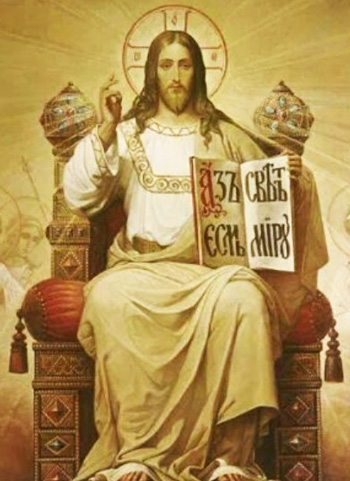 This Kingship is an actual reality insofar as it is considered as the obedience that each faithful soul renders to Our Lord Jesus Christ. Indeed, the Kingship of Christ is exercised over souls; thus, the soul of each one of us constitutes a portion of the sphere of jurisdiction of Christ the King. The Kingship of Christ becomes a social reality if human societies render Him obedience.
It may be said, therefore, that the Kingdom of Christ becomes effective on earth – in both its individual and social senses – when men – in the depths of their souls as well as in their actions – and societies – in their institutions, laws, customs, and cultural and artistic expressions – conform themselves to the Law of Christ.
No matter how concrete, brilliant and tangible the earthly reality of the Kingdom of Christ may be – such as, for example, in the 13th century – one must not forget that this Kingdom is nothing but a preparation and a prelude. In its fullness, the Kingdom of God will be realized in Heaven: "My Kingdom is not of this world..." (Jn 18:36)
Order, harmony & peace
Order, harmony and peace are essential characteristics of every well-formed soul and every well-constituted human society. In a certain sense, they are values that are inseparable from the very notion of perfection.
Every being has its own specific end, and a nature suited to attain that end. Each clockwork component, for example, has its own specific end and – by its form and composition – is suited to the fulfill that end.
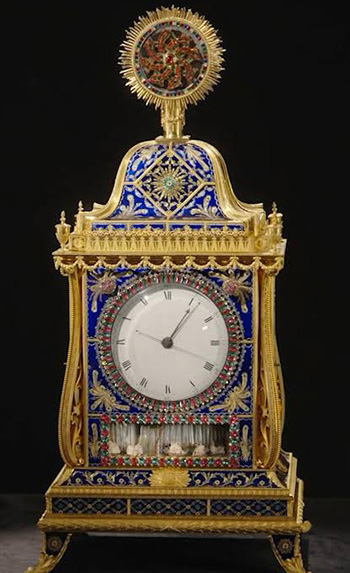
Order is the arrangement of things in accordance with their nature and their end. Thus, a clock is in order when all its parts are arranged in accordance with the clock’s nature and its proper end. It is said that there is order in the sidereal universe because all of the celestial bodies are arranged in accordance with their nature and end.
Harmony exists when the relationships between two beings conform to the nature and end of each. Harmony is the interaction of things with one another in accordance with order.
 Order engenders tranquility. The tranquility of order is peace. It is not just any tranquility that deserves to be called peace, but only that which results from order. Peace of conscience is the tranquility of an upright conscience; it must not be confused with the lethargy of a dulled conscience. Organic well-being produces a sensation of peace that cannot be confused with the inertia of a comatose state.
When a being is entirely ordered in accordance with its nature, it is in a state of perfection. Thus, a person with a great capacity and a great desire to study who is placed in a university that has all the means to pursue the studies he desires, is situated, from the standpoint of his studies, in a perfect condition.
When the activities of a being conform entirely to its nature and tend entirely toward its end, these activities are, in a certain sense, perfect. Thus, the trajectory of the stars is perfect, for it corresponds entirely to the nature and end of each star.
When the conditions in which a being finds itself are perfect, its operations are likewise perfect; consequently, it will necessarily tend toward its end with the utmost constancy, vigor and precision. Thus, if a man is in perfect conditions for walking – that is, if he has the ability, desire and capacity to walk well – he will walk in an irreproachable manner.
A true understanding of what constitutes the perfection of man and of societies depends upon an exact notion of man's nature and end.
The precision, fruitfulness and splendor of human actions – whether individual or social – consists in dependence upon the knowledge of our nature and end. In other words, the possession of religious truth is the essential condition for order, harmony, peace and perfection.
Catholic perfection
The Gospel points us to an ideal of perfection: "Be perfect, just as your heavenly Father is perfect" (Mt 5:48). In this counsel, given to us by Our Lord Jesus Christ, He Himself teaches us how to fulfill. Indeed, Jesus Christ is the absolute likeness of the Heavenly Father's perfection, the supreme model Whom we must all imitate.
Our Lord Jesus Christ – His virtues, His teachings and His actions – constitutes the definitive ideal of perfection toward which man must tend.
The rules for this perfection are found in the Law of God – which Our Lord Jesus Christ "did not come to abolish, but to fulfill" (Mt. 5:17) – and in the evangelical precepts and counsels.
The Church, guarantee of both Covenants
Furthermore, to ensure that man would not fall into error when interpreting these commandments and counsels, Our Lord Jesus Christ instituted an infallible Church, which possesses divine assistance to ensure that she never errs in matters of Faith and Morals. Fidelity of thought and action to the Magisterium of the Church is, therefore, the means by which all men may come to know and practice that ideal of perfection which is Our Lord Jesus Christ.
 This is precisely what the Saints did, those who, by heroically practicing the virtues taught by the Church, achieved a perfect imitation of Our Lord Jesus Christ and of the Heavenly Father. It is so true that the Saints attained the highest moral perfection that even the very enemies of the Church – when the fury of impiety does not blind them – proclaim it. Of St. Louis IX, King of France, for example, Voltaire wrote: "It is not possible for man to carry virtue any further." The same could be said of all the Saints.
God is the author of our nature and, therefore, of all the aptitudes and excellences found therein. In us, the only things that do not originate from God are our defects, which are the fruits of original sin or of actual sins.
The Decalogue could not be contrary to the very nature God Himself created inside us; for, since God is perfect, there can be no contradiction in His works.
For this reason, the Decalogue enjoins upon us actions that our own reason shows us to be in conformity with nature – such as honoring one's father and mother – and forbids actions that, through simple reason, we perceive to be contrary to the natural order – such as lying.
In this consists – on the natural plane – the intrinsic perfection of the Law, as well as the personal perfection we acquire by practicing it. For all operations that are in conformity with one’s nature are good.
As a consequence of original sin, man was left with a propensity to perform actions contrary to his nature rightly understood. Thus, he became subject to error in the realm of the intellect, and to evil in the sphere of the will.
This propensity is so pronounced that, without the aid of grace, it would be impossible for men to know or practice – durably and in their entirety – the precepts of the natural order. By revealing these precepts atop Mount Sinai, by establishing in the New Covenant a Church destined to safeguard men from human sophistries and transgressions, and by instituting the Sacraments and other means of piety designed to strengthen man with grace, God remedied this human insufficiency.
Grace is a supernatural aid, intended to strengthen man's intellect and will in order for him to practice perfection. God refuses grace to no one. Perfection is, therefore, accessible to all.
Can non-Catholics be saved?
Can an infidel know and practice the Law of God? Does he receive God's grace?
A distinction must be made. In principle, all men who come into contact with the Catholic Church receive sufficient grace to recognize that she is true, to enter her, and to practice the Commandments. Therefore, if someone voluntarily remains outside the Church – if he is an infidel because he refuses the grace of conversion, which is the starting point for all other graces – he closes the doors of salvation upon himself.
 However, if someone lacks the means to know the Holy Church – a pagan, for example, whose country has not been visited by missionaries – he possesses sufficient grace to know and to practice at least the most essential principles of the Law of God [Natural Law], for God refuses the grace to no one.
It must be observed, however, that if fidelity to the Law demands sacrifices – at times heroic ones – from the Catholics living inside the bosom of the Church, bathed in a superabundance of grace and all the means of sanctification, the difficulty in practicing that Law faced by those living far from the Church and outside of this superabundance, is still much greater. This explains why gentiles who practice the Law are so rare, they are truly exceptional cases.
To be continued
The Kingship of Christ must be exercised over the whole society
It may be said, therefore, that the Kingdom of Christ becomes effective on earth – in both its individual and social senses – when men – in the depths of their souls as well as in their actions – and societies – in their institutions, laws, customs, and cultural and artistic expressions – conform themselves to the Law of Christ.
No matter how concrete, brilliant and tangible the earthly reality of the Kingdom of Christ may be – such as, for example, in the 13th century – one must not forget that this Kingdom is nothing but a preparation and a prelude. In its fullness, the Kingdom of God will be realized in Heaven: "My Kingdom is not of this world..." (Jn 18:36)
Order, harmony & peace
Order, harmony and peace are essential characteristics of every well-formed soul and every well-constituted human society. In a certain sense, they are values that are inseparable from the very notion of perfection.
Every being has its own specific end, and a nature suited to attain that end. Each clockwork component, for example, has its own specific end and – by its form and composition – is suited to the fulfill that end.
Order is the arrangement of things in accordance with their nature and their end. Thus, a clock is in order when all its parts are arranged in accordance with the clock’s nature and its proper end. It is said that there is order in the sidereal universe because all of the celestial bodies are arranged in accordance with their nature and end.
Harmony exists when the relationships between two beings conform to the nature and end of each. Harmony is the interaction of things with one another in accordance with order.
A clock is in order when all its parts are properly arranged; so also, a society with its individual souls
When a being is entirely ordered in accordance with its nature, it is in a state of perfection. Thus, a person with a great capacity and a great desire to study who is placed in a university that has all the means to pursue the studies he desires, is situated, from the standpoint of his studies, in a perfect condition.
When the activities of a being conform entirely to its nature and tend entirely toward its end, these activities are, in a certain sense, perfect. Thus, the trajectory of the stars is perfect, for it corresponds entirely to the nature and end of each star.
When the conditions in which a being finds itself are perfect, its operations are likewise perfect; consequently, it will necessarily tend toward its end with the utmost constancy, vigor and precision. Thus, if a man is in perfect conditions for walking – that is, if he has the ability, desire and capacity to walk well – he will walk in an irreproachable manner.
A true understanding of what constitutes the perfection of man and of societies depends upon an exact notion of man's nature and end.
The precision, fruitfulness and splendor of human actions – whether individual or social – consists in dependence upon the knowledge of our nature and end. In other words, the possession of religious truth is the essential condition for order, harmony, peace and perfection.
Catholic perfection
The Gospel points us to an ideal of perfection: "Be perfect, just as your heavenly Father is perfect" (Mt 5:48). In this counsel, given to us by Our Lord Jesus Christ, He Himself teaches us how to fulfill. Indeed, Jesus Christ is the absolute likeness of the Heavenly Father's perfection, the supreme model Whom we must all imitate.
Our Lord Jesus Christ – His virtues, His teachings and His actions – constitutes the definitive ideal of perfection toward which man must tend.
The rules for this perfection are found in the Law of God – which Our Lord Jesus Christ "did not come to abolish, but to fulfill" (Mt. 5:17) – and in the evangelical precepts and counsels.
The Church, guarantee of both Covenants
Furthermore, to ensure that man would not fall into error when interpreting these commandments and counsels, Our Lord Jesus Christ instituted an infallible Church, which possesses divine assistance to ensure that she never errs in matters of Faith and Morals. Fidelity of thought and action to the Magisterium of the Church is, therefore, the means by which all men may come to know and practice that ideal of perfection which is Our Lord Jesus Christ.
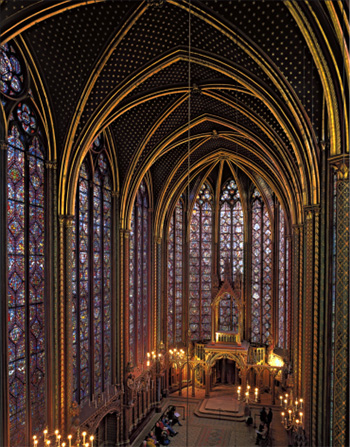
The glory & splendor of the Church radiates from her very buildings
God is the author of our nature and, therefore, of all the aptitudes and excellences found therein. In us, the only things that do not originate from God are our defects, which are the fruits of original sin or of actual sins.
The Decalogue could not be contrary to the very nature God Himself created inside us; for, since God is perfect, there can be no contradiction in His works.
For this reason, the Decalogue enjoins upon us actions that our own reason shows us to be in conformity with nature – such as honoring one's father and mother – and forbids actions that, through simple reason, we perceive to be contrary to the natural order – such as lying.
In this consists – on the natural plane – the intrinsic perfection of the Law, as well as the personal perfection we acquire by practicing it. For all operations that are in conformity with one’s nature are good.
As a consequence of original sin, man was left with a propensity to perform actions contrary to his nature rightly understood. Thus, he became subject to error in the realm of the intellect, and to evil in the sphere of the will.
This propensity is so pronounced that, without the aid of grace, it would be impossible for men to know or practice – durably and in their entirety – the precepts of the natural order. By revealing these precepts atop Mount Sinai, by establishing in the New Covenant a Church destined to safeguard men from human sophistries and transgressions, and by instituting the Sacraments and other means of piety designed to strengthen man with grace, God remedied this human insufficiency.
Grace is a supernatural aid, intended to strengthen man's intellect and will in order for him to practice perfection. God refuses grace to no one. Perfection is, therefore, accessible to all.
Can non-Catholics be saved?
Can an infidel know and practice the Law of God? Does he receive God's grace?
A distinction must be made. In principle, all men who come into contact with the Catholic Church receive sufficient grace to recognize that she is true, to enter her, and to practice the Commandments. Therefore, if someone voluntarily remains outside the Church – if he is an infidel because he refuses the grace of conversion, which is the starting point for all other graces – he closes the doors of salvation upon himself.
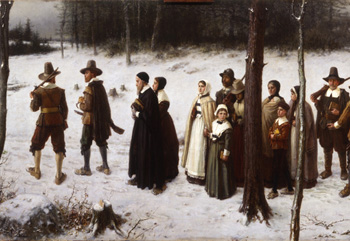
Pilgrims going to their ‘church’; they knew & hated the Catholilc Church
It must be observed, however, that if fidelity to the Law demands sacrifices – at times heroic ones – from the Catholics living inside the bosom of the Church, bathed in a superabundance of grace and all the means of sanctification, the difficulty in practicing that Law faced by those living far from the Church and outside of this superabundance, is still much greater. This explains why gentiles who practice the Law are so rare, they are truly exceptional cases.
To be continued
Posted October 28, 2026



______________________
______________________
 |
 |
 |