International Affairs
 |
 |
 |
 |
 |
 |
 |
U.S. Prepares to Strike Iran
as Russian Drills Begin
- Diplomatic talks between the U.S. and Iran have stalled, with no agreement on nuclear demands.
- The U.S. is mobilizing a major naval force near Iran, including two aircraft carriers.
- American military sources indicate preparedness for a large-scale strike as early as this weekend.
- Iran is responding by showcasing military alliances, like joint naval drills with Russia.
- The situation is a high-stakes brinkmanship with motives unclear but the risk of war rapidly increasing.
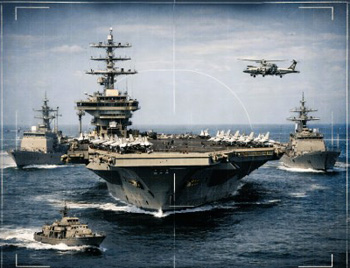
USS Abraham Lincoln is close to the Iranian coast
President Trump escalated the rhetoric on social media, warning that if Iran declines a deal, the U.S. may need to use an Indian Ocean airbase “in order to eradicate a potential attack by a highly unstable and dangerous Regime.”
This threat comes alongside an unprecedented American military mobilization in the Middle East. A second aircraft carrier, the USS Gerald R. Ford, is en route to join the USS Abraham Lincoln, which is already positioned a few hundred miles from the Iranian coast. This buildup, including land-based attack aircraft and support assets, is of a scale not seen in decades.
A timeline measured in days
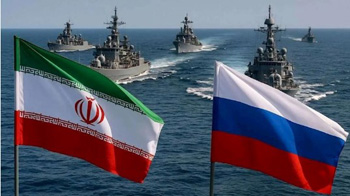
Russian-Iran drills started in the Gulf of Oman
This pressure campaign mirrors past tactics. A previous negotiating effort collapsed last year when U.S. strikes hit Iranian nuclear sites. Now, Vice President JD Vance said Iran failed to meet Trump’s “red lines” in Geneva. “The message to the Iranians is crystal clear: Come to the table, meet the red lines and get a deal done – or else,” a source familiar with White House discussions said.
Diverging priorities & new alliances
Complicating the standoff are differing priorities among U.S. allies. For Washington, the nuclear program is paramount. For Israel, the immediate threat is Iran’s expanding ballistic missile arsenal. Regional partners are focused on Iranian-backed proxy groups. This three-front concern means a narrow nuclear deal may not prevent conflict. “If it doesn’t include the proxy groups, other regional partners may not be satisfied either,” a U.S. source noted.
As the U.S. flexes its military muscle, Iran is showcasing its own partnerships. Tehran announced joint naval drills with Russia in the Sea of Oman, set for Thursday. Rear Admiral Hassan Maqsoudlou said the exercises are aimed “to convey a message of peace and friendship” and prevent “any unilateral action in the region.” Russian Foreign Minister Sergey Lavrov issued a blunt warning against new U.S. strikes. “The consequences are not good,” Lavrov said. “No one wants an increase in tension. Everyone understands this is playing with fire.”
The White House, however, remains circumspect about its ultimate objectives. When pressed on the rationale for a potential strike, especially given Trump’s past claims to have “obliterated” Iran’s nuclear facilities, Leavitt was vague. “Well, there are many reasons and arguments that one could make for a strike against Iran,” she said, declining to elaborate further.
We are left watching a high-stakes game of brinkmanship where the motives are unclear but the weapons are real. With forces in place and diplomats talking past each other, the power to choose war or peace rests on the judgment of a few. As the world nervously checks the news, the hope for a diplomatic off-ramp is fading beneath the shadow of arriving warships.
Read other articles by Cassie B. here
Posted February 20, 2026



______________________
______________________
 The Return of the Muslim Threat |
 War, Just War |
 In the Wake of the Crusades |
 The Universal Republic Blessed by the Conciliar Popes |
 Vade Mecum on the Errors of Nazism |
 Curious Affinities Between the Thinking of John Paul II and Marxism |