Art & Architecture
 |
 |
 |
 |
 |
 |
 |
The Lactation of the Virgin Mary -
An Overview
Recently, TIA received this question from a reader of our website who was confused about medieval depictions of the Lactation of Our Lady. The message follows:
 Dear TIA,
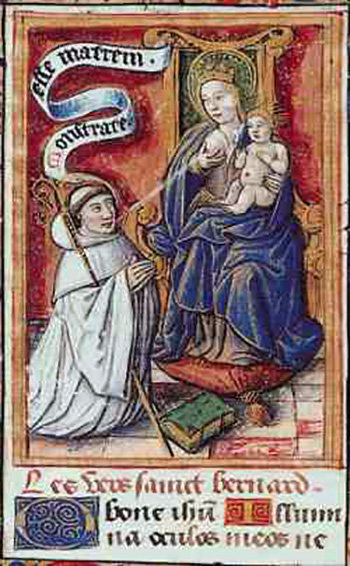
While searching for paintings to display in our home, I recently came across many medieval old paintings and depictions of Saint Bernard having a vision of Our Lady and she has one breast exposed and is squirting milk in his mouth or towards him.
I have never seen or heard of this depiction before and it seems strange and indecent and made me uncomfortable. Have you ever heard of this before? Do you know the history of it? Did it really happen? What are your thoughts on this?
Many of the depictions of Mary nursing Jesus go back to the medieval times and there are even some from the early Church so that has me a little confused that there would be depictions of Our Lady that, in my opinion, are not modest. It seems like it would be immodest in any age ever since Adam and Eve committed sin and made fig leaves to cover themselves.
I was wondering what your thoughts were on this type of depiction of Mary. Was it mainly secular painters that painted these?
I know people argue in favor of these depictions citing that it only makes us uncomfortable because we live in an extremely impure and overly sexualized society and back then they saw exposed breasts during breastfeeding more innocently and in paintings for their symbolic spiritual meaning. Something does not sit right with me because, as I said before, it seems like modesty should be the same in any age.
Thanking you in advance for your response.
God bless you,
C.T.
Dr. Horvat responds:
Dear C.T.,
Thank you for your question and the confidence it reveals in TIA.
To answer your question, let me divide it into parts to help make this delicate topic better understood.
1. Today, should Catholic mothers breast-feed their infants in public?
Given the enormous tide of immorality resulting from both our fallen passions and the huge amount of erotic propaganda made by the Revolution, which is based upon pride and sensuality, I suggest all mothers to follow the norms given by the Curé d’Ars, St. John Vianney, which are reproduced here. Basically what he instructs is that a mother should be as discreet as possible and cover her breasts while feeding her infant in public.
2. How was the breast-feeding considered by Our Lady & Our Lord?
During her gestation Our Lady formed the entire Body of Our Lord, which was hypostatically united with the Divine Word, and thus she became worthy of the title of Mother of God. During that time, parallel to the physical gestation of His Body, their spiritual relationship encompassed the most elevated mysteries of our Faith. No relationship was ever comparable to theirs or ever will be.
After generating His Body, her relationship with the Man-God continued to deepen by breast-feeding Him: that is, by vitally sustaining Him and making His Body develop from a fragile Infant to a nourished Child. So, besides creating Him in her womb, she sustained Him with her milk once He was born.
What lofty spiritual realities took place then? We do not know. We only know that she had the most dedicated sense of protection combined with the highest adoration for that Child Who was her God. All the words of our human language are incapable of expressing her maternal love and care for Him and, in return, the sweetness of His gratitude and joyful dependence He wanted to have on her.
The conclusion is that the milk coming from her immaculate body was a material symbol of her sustenance of His Body and the vital food for His growth.
A necessary consequence of this is that since she, by her milk, was the sustainer of His physical Body, she also must be the sustainer of His Mystical Body, which is the Catholic Church. From this comes the thinking that all Catholics need her milk to spiritually develop and grow.
Confirming these thoughts, the Holy Ghost inspired a woman to greet Our Lord with these words: “Blessed is the womb that bore thee, and the paps that gave thee suck.” (Lk 11:27)
Fr. Cornelius a Lapide comments on this verse:
“For this womb was a temple, a bridal chamber, a heaven, and a throne for the glory of the Son of God. Consider, therefore, with what gifts of grace it was adorned, so as to become worthy of God. Moreover, how holy must this womb have been, since the very holiness of God, by dwelling within it for nine months and by taking from it both His flesh and nourishment, sanctified it and consecrated it.
"For this reason, the Church frequently sings to the Virgin: ‘Blessed is the womb of the Virgin Mary, which bore the Son of the Eternal Father; and blessed are the breasts that nursed Christ the Lord.’ (Commentaria in Scripturam Sanctam, in Lucam 11:27, Paris, Vives, 1878, vol. 16, p. 162)
We can easily see that the breast-feeding of Our Lady was an act that could not be more holy. In itself there is nothing indecent in it, as seen in the Gospel and in the commentaries on it.
3. What good reflections of this ideal influenced piety and art?
It is not difficult to realize that the sweetness and elevation of that physical and spiritual relationship between Our Lady and the Divine Infant permeated the atmosphere of the first centuries of the Church. In that ambience it would not pass by any Catholic mind that the pure breast of Our Lady could raise any other sentiments but those I mentioned above, all supernatural.
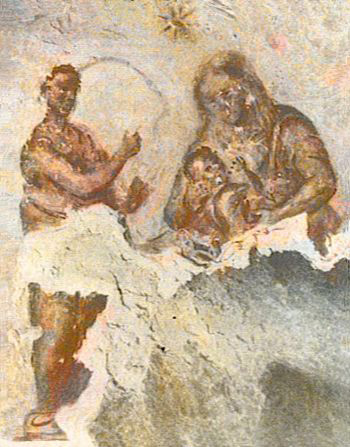 This is why we found already in the Catacombs frescos of the Virgin Mary nursing the Infant Jesus. In the fresco in the Catacomb of Priscilla (3rd c.), Our Lady nurses the Infant as a man points to the star of Bethlehem above them.
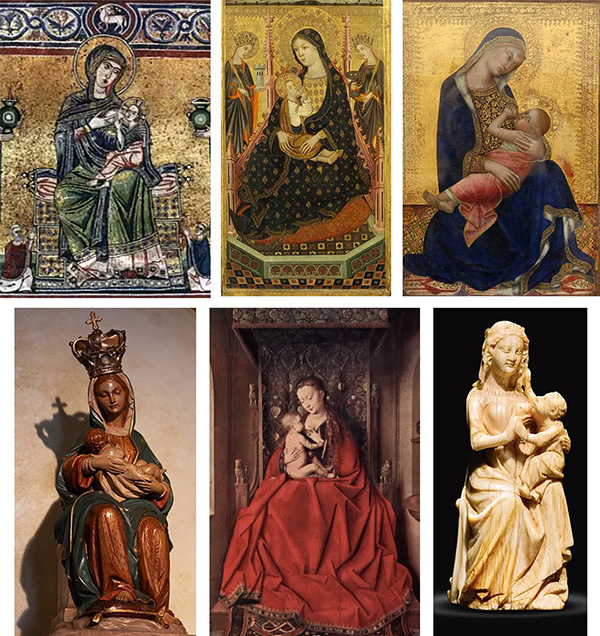
Thenceforth, Catholic piety from time to time would depict her nursing the Divine Infant. In the East she had the name Virgin Galaktotrophousa (Milk-Giver); across Europe Maria Lactans; in Italy and Spain, the Madonna of Humility, and Nuestra Señora de La Leche in the Americas.
The medieval man would have before his eyes those Gospel verses and phrases from the Song of Songs, where milk is used to describe sweetness, purity and beauty; or from Isaiah, where the image of Paradise itself is described as being like that of a child suckling at his mother’s breast (66:12).
In the East the great St. Ephraim (d. 373) wrote: "He was lofty, but He sucked Mary's milk, and from His blessings all creation sucks. He is the Living Breast of living breath; by His life the dead were suckled, and they revived."
Great Marian Doctors such as St. Louis Grignion de Montfort applied it as a symbol to describe how Our Lady treats those whom she loves in a special way:
“Our Lady's charity towards her faithful servants goes further. She provides them with everything they need for body and soul. We have just seen that she gives them double garments. She also nourishes them with the most delicious food from the banquet table of God. She gives them the Son she has borne, the Bread of Life, to be their food.
"‘Dear children,’ she says in the words of Divine Wisdom, ‘take your fill of my fruits,’ that is to say, of the Fruit of Life, Jesus, ‘whom I brought into the world for you.’ ‘Come,’ she repeats in another passage, ‘eat the bread which is Jesus. Drink the wine of His love which I have mixed’ for you with the milk of my breasts. (Treatise of the True Devotion to Mary, § 208)
So, we see that those elevated thoughts continued to have a good influence on Catholic piety and art.
4. How did revolutionary abuses change the Church's position?
However, with the beginning of the Revolution with the medieval movement of courtly love, and later with Humanism and Renaissance, a great relaxation of customs entered the medieval mindset. Nudism became common in art and some depictions of Our Lady nourishing Our Lord became less pure and somewhat extravagant.
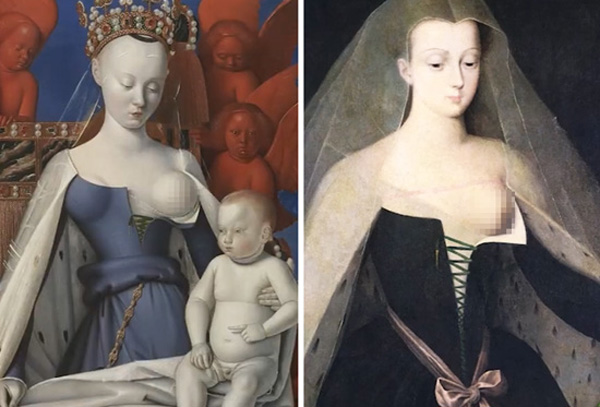
Instead of raising the mind to those lofty thoughts, with a few exceptions they conformed to the general revolutionary fashion. The most expressive example of these abuses was the depiction of Our Lady with a provocative exposed breast, modeled after a similar painting of a mistress of a King of France. Such images date from the period when the immorality of the Renaissance and the germs of Protestantism were corroding Catholic society.
This is why in 1563 the Council of Trent strongly recommended an end to indecorous paintings and statues that could raise bad thoughts in viewers (see Session XXV, p. 150 here).
This rule of Trent remained in force for more than 450 years. I believe that the same rule should remain valid today and paintings should no longer be made that depict the breast-feeding of the Christ Child.
Recently, however, when the world is universally immersed in immorality, the Vatican lifted that ban… One thing is for certain: It was not done for the love of morality…
Regarding the Lactation of St. Bernard, which you mentioned in your message, the painting in the Cathedral of Speyer dates from 1146 and protrays Our Lady appearing to the Saint. I would still include it in the innocent medieval period. Later versions fit better into the pre-Protestant period.
Here you have my analysis of Our Lady’s breast-feeding the Christ Child in piety and art.
I hope this is of some help for you.

Depiction of St. Bernard receiving milk from the Virgin Mary at Speyer Cathedral, 1146
While searching for paintings to display in our home, I recently came across many medieval old paintings and depictions of Saint Bernard having a vision of Our Lady and she has one breast exposed and is squirting milk in his mouth or towards him.
I have never seen or heard of this depiction before and it seems strange and indecent and made me uncomfortable. Have you ever heard of this before? Do you know the history of it? Did it really happen? What are your thoughts on this?
Many of the depictions of Mary nursing Jesus go back to the medieval times and there are even some from the early Church so that has me a little confused that there would be depictions of Our Lady that, in my opinion, are not modest. It seems like it would be immodest in any age ever since Adam and Eve committed sin and made fig leaves to cover themselves.
I was wondering what your thoughts were on this type of depiction of Mary. Was it mainly secular painters that painted these?
I know people argue in favor of these depictions citing that it only makes us uncomfortable because we live in an extremely impure and overly sexualized society and back then they saw exposed breasts during breastfeeding more innocently and in paintings for their symbolic spiritual meaning. Something does not sit right with me because, as I said before, it seems like modesty should be the same in any age.
Thanking you in advance for your response.
God bless you,
C.T.
______________________
Dr. Horvat responds:
Dear C.T.,
Thank you for your question and the confidence it reveals in TIA.
To answer your question, let me divide it into parts to help make this delicate topic better understood.
- How should a mother breast-feeding an infant in public be considered today? Given that past Catholic art presented Our Lady breast-feeding Our Lord, should not mothers do the same today?
- How was the relationship between Our Lady and Our Lord seen in these breast-feeding paintings, in view of the fact that both did not have original sin?
- What good reflections of this ideal relationship influenced piety and art?
- How did changes in mentality and abuses modify the Church's position on this topic?
1. Today, should Catholic mothers breast-feed their infants in public?
Given the enormous tide of immorality resulting from both our fallen passions and the huge amount of erotic propaganda made by the Revolution, which is based upon pride and sensuality, I suggest all mothers to follow the norms given by the Curé d’Ars, St. John Vianney, which are reproduced here. Basically what he instructs is that a mother should be as discreet as possible and cover her breasts while feeding her infant in public.
2. How was the breast-feeding considered by Our Lady & Our Lord?
During her gestation Our Lady formed the entire Body of Our Lord, which was hypostatically united with the Divine Word, and thus she became worthy of the title of Mother of God. During that time, parallel to the physical gestation of His Body, their spiritual relationship encompassed the most elevated mysteries of our Faith. No relationship was ever comparable to theirs or ever will be.
After generating His Body, her relationship with the Man-God continued to deepen by breast-feeding Him: that is, by vitally sustaining Him and making His Body develop from a fragile Infant to a nourished Child. So, besides creating Him in her womb, she sustained Him with her milk once He was born.
What lofty spiritual realities took place then? We do not know. We only know that she had the most dedicated sense of protection combined with the highest adoration for that Child Who was her God. All the words of our human language are incapable of expressing her maternal love and care for Him and, in return, the sweetness of His gratitude and joyful dependence He wanted to have on her.
The conclusion is that the milk coming from her immaculate body was a material symbol of her sustenance of His Body and the vital food for His growth.
A necessary consequence of this is that since she, by her milk, was the sustainer of His physical Body, she also must be the sustainer of His Mystical Body, which is the Catholic Church. From this comes the thinking that all Catholics need her milk to spiritually develop and grow.
Confirming these thoughts, the Holy Ghost inspired a woman to greet Our Lord with these words: “Blessed is the womb that bore thee, and the paps that gave thee suck.” (Lk 11:27)
Fr. Cornelius a Lapide comments on this verse:
“For this womb was a temple, a bridal chamber, a heaven, and a throne for the glory of the Son of God. Consider, therefore, with what gifts of grace it was adorned, so as to become worthy of God. Moreover, how holy must this womb have been, since the very holiness of God, by dwelling within it for nine months and by taking from it both His flesh and nourishment, sanctified it and consecrated it.
"For this reason, the Church frequently sings to the Virgin: ‘Blessed is the womb of the Virgin Mary, which bore the Son of the Eternal Father; and blessed are the breasts that nursed Christ the Lord.’ (Commentaria in Scripturam Sanctam, in Lucam 11:27, Paris, Vives, 1878, vol. 16, p. 162)
We can easily see that the breast-feeding of Our Lady was an act that could not be more holy. In itself there is nothing indecent in it, as seen in the Gospel and in the commentaries on it.
3. What good reflections of this ideal influenced piety and art?
It is not difficult to realize that the sweetness and elevation of that physical and spiritual relationship between Our Lady and the Divine Infant permeated the atmosphere of the first centuries of the Church. In that ambience it would not pass by any Catholic mind that the pure breast of Our Lady could raise any other sentiments but those I mentioned above, all supernatural.
One of the earliest depictions of the Virgin in the Catacomb of Priscilla, Rome
Thenceforth, Catholic piety from time to time would depict her nursing the Divine Infant. In the East she had the name Virgin Galaktotrophousa (Milk-Giver); across Europe Maria Lactans; in Italy and Spain, the Madonna of Humility, and Nuestra Señora de La Leche in the Americas.
The medieval man would have before his eyes those Gospel verses and phrases from the Song of Songs, where milk is used to describe sweetness, purity and beauty; or from Isaiah, where the image of Paradise itself is described as being like that of a child suckling at his mother’s breast (66:12).
In the East the great St. Ephraim (d. 373) wrote: "He was lofty, but He sucked Mary's milk, and from His blessings all creation sucks. He is the Living Breast of living breath; by His life the dead were suckled, and they revived."
Great Marian Doctors such as St. Louis Grignion de Montfort applied it as a symbol to describe how Our Lady treats those whom she loves in a special way:
“Our Lady's charity towards her faithful servants goes further. She provides them with everything they need for body and soul. We have just seen that she gives them double garments. She also nourishes them with the most delicious food from the banquet table of God. She gives them the Son she has borne, the Bread of Life, to be their food.
"‘Dear children,’ she says in the words of Divine Wisdom, ‘take your fill of my fruits,’ that is to say, of the Fruit of Life, Jesus, ‘whom I brought into the world for you.’ ‘Come,’ she repeats in another passage, ‘eat the bread which is Jesus. Drink the wine of His love which I have mixed’ for you with the milk of my breasts. (Treatise of the True Devotion to Mary, § 208)
So, we see that those elevated thoughts continued to have a good influence on Catholic piety and art.
Top left to right: In Santa Maria Trastevere, Rome, 13th c; Madonna Lactans 14th c.; Italian 1300; bottom: Our Lady of La Leche, St. Augustine FL, 17th c.; Lucca Madonna, Jan von Eyck, 1437; French school 14th c.
4. How did revolutionary abuses change the Church's position?
However, with the beginning of the Revolution with the medieval movement of courtly love, and later with Humanism and Renaissance, a great relaxation of customs entered the medieval mindset. Nudism became common in art and some depictions of Our Lady nourishing Our Lord became less pure and somewhat extravagant.
Instead of raising the mind to those lofty thoughts, with a few exceptions they conformed to the general revolutionary fashion. The most expressive example of these abuses was the depiction of Our Lady with a provocative exposed breast, modeled after a similar painting of a mistress of a King of France. Such images date from the period when the immorality of the Renaissance and the germs of Protestantism were corroding Catholic society.
The supposed Virgin nourishing the Child by Jean Fouquet, left, was allegedly based on the portrait of Agnes Sorel, the mistress of King Charles VII of France
This is why in 1563 the Council of Trent strongly recommended an end to indecorous paintings and statues that could raise bad thoughts in viewers (see Session XXV, p. 150 here).
This rule of Trent remained in force for more than 450 years. I believe that the same rule should remain valid today and paintings should no longer be made that depict the breast-feeding of the Christ Child.
Recently, however, when the world is universally immersed in immorality, the Vatican lifted that ban… One thing is for certain: It was not done for the love of morality…
Regarding the Lactation of St. Bernard, which you mentioned in your message, the painting in the Cathedral of Speyer dates from 1146 and protrays Our Lady appearing to the Saint. I would still include it in the innocent medieval period. Later versions fit better into the pre-Protestant period.
Here you have my analysis of Our Lady’s breast-feeding the Christ Child in piety and art.
I hope this is of some help for you.


Posted November 6, 2026
______________________
______________________
 Volume I |
 Volume II |
 Volume III |
 Volume IV |
 Volume V |
 Volume VI |
 Volume VII |
 Volume VIII |
 Volume IX |
 Volume XI |
 Special Edition |
 Special Edition |