Symbolism
 |
 |
 |
 |
 |
 |
 |
The Real St. Francis
In December I bought a copy of the book The Philosophy of St. Bonaventure, written by that well-knownt historian of philosophy, Étienne Gilson. Skimming through a preview while it shipped, one excerpt affected me more deeply than any had before. For, while the author did not attempt a hagiography, this passage, at least, was quite instructive about the sanctity of St. Francis; more than that, it is intensely evocative of the beauty of his contemplation.
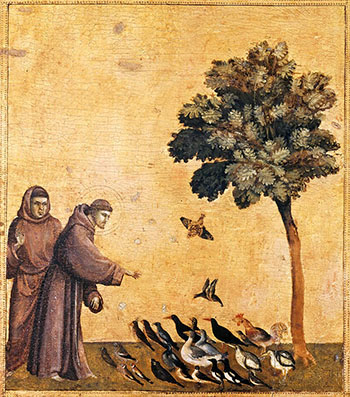 By comparison, most other mentions of St. Francis seem to do him an injustice. Often, he is considered merely “that saint who talked with animals,” a silly fool who did things like this to amuse himself or others. This is never explicitly stated, but it is the impression left by those shallow, out-of-context descriptions.
Really, he was a profoundly serious man. When little things seemed of import to him, it was because, like the archetypal hermit, he understood “the highest reasons for which each thing was created and its sacred, august character.”
In our days when seriousness has become a pariah and man seems to have forgotten the true nature of the universe – that it is a complement to the spiritual and reflects the qualities of God – passages like these are more necessary than ever. Never before have so many men been literate, and yet been unable to read the book of Creation…
Étienne Gilson: “St. Francis’s influence upon Bonaventure had not been only moral: it had in fact penetrated to the very depths of his intellect. It was Francis who taught the Doctor of the University of Paris, with all his learning, the lesson of total adherence to God by the savor of contemplation which Bonaventure was to make the directive principle of his whole doctrine.
“St. Francis’s whole effort was to live in a sort of permanent contact with the presence of God; at first he sought it in solitude, and St. Bonaventure was right when he said that the eremitical life was one of the constituent elements of the Franciscan ideal. But this mystical experience, reserved at first for certain extraordinary moments in exceptional solitude, did in the end become a kind of habit in him.
 “More and more St. Francis bore his solitude about with him. The body in which his soul was enclosed remained the sole dividing wall between him and heaven: already, on earth, he was a citizen of the heavenly fatherland: angelorum civem jam factum solus carnis paries disjungebat [The wall of flesh alone separated him, now made a citizen of angels]: but the dividing wall of his body, if it separated him from heaven, also allowed him to be in isolation from the world. ….
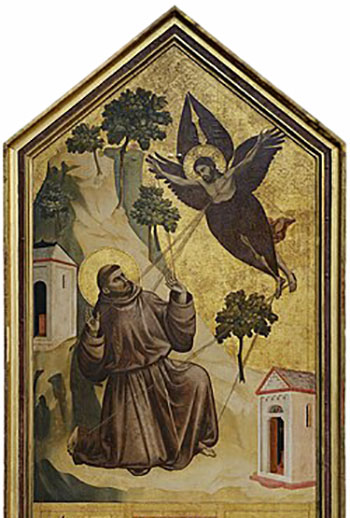
“Of what nature were these heavenly joys? … They must have been of incomparable sweetness, since he never allowed any task, however urgent, to interrupt them: and we know that once he passed through Borgo San Sepolchro utterly unaware of the crowd that thronged about him. The culminating point of these mentis excessus [mental disorder] was reached in the solitude of Mount Alvernia, where St. Francis saw God and himself under the appearance of a twofold light, and whence he returned bearing the stigmata impressed in his flesh by the six-winged Seraphim.
“When contemplation rises to this degree of perfection, it acts like a real force with effects immediately perceptible: the contemplative who comes back from these celestial regions to life among men, comes back with virtues beyond the human, he passes in the midst of things as an angel might pass: radiating extraordinary forces, seeing into what is fundamental in beings, entering into communion through the wrappings of matter with whatever of divine lies hid in the heart of each.
“Think first of the forces: an indiscreet bishop loses the use of his tongue when he comes to interpret the prayer of St. Francis; an abbot for whom St. Francis has agreed to pray feels himself penetrated almost beyond his bearing by a glow and a sweetness for which there is no name: Birds, beasts, plants, the very elements obey him, for he enters into relations with them by virtues which are no t to be acquired in any purely human condition.
 “But this kind of external force is not the only or the most important thing that he draws from his ecstasy. There is also a profundity of thought whereby he can read deeper into things and writings than any man could do who seeks to discover their sense with the aid of human learning. We have seen how deeply he penetrated into the meaning of Scripture; but he saw equally deeply into the meaning of beings, discovering among them relations unknown to the learned.
“Ecstasy, of course, is not exactly a transient experience of the Beatific Vision as the elect will possess in eternity, but most certainly it is in our human experience the one thing that comes closest to it. It implies a sort of suspension of the soul, detaching it in some measure from the body and by that very fact conferring upon it the virtues of action and knowledge that belong to a spirituality purer than ours.
“Because he had just experienced an almost total liberation of his soul from his body, because he had just made almost immediate contact with the first Type of all things, the man who came down from Alvernia could penetrate the sense of creatures, and decipher their secret without difficulty. Even if he lost for a time the immediate contact with the Divine Presence, he yet remained a man illumined, divining God in things, even when he no longer possessed Him.
“Hence the endlessly springing fountain of symbols or rather the permanent transfiguration of the universe in which he saw, not fragments of matter or beings deprived of knowledge, but precious images of God. Having touched God, St. Francis could discover His presence where ordinary mortals were, and could only be, unmindful of it.
“In those Middle Ages with their passion for symbolism …. St. Francis appears as an inventor; it was because he had rediscovered the first source from which all symbols flow that he was able to create while others repeated, that he was able especially to see the deepest sense of beings in their symbolical significance.
“His thirteenth-century biographers well saw what a distance there was between the allegories seen, lived and loved by St. Francis and the mass of cliches deposited by tradition in the formulas of the Lapidaries and Bestiaries of the time. Celano not only points out how original and spontaneous was the art with which St. Francis read the meaning of things, he also gives us the reason: St. Francis was already free of this world, he might enjoy the liberty reserved by Beatific Glory for the Children of God.
 “The universe as St. Francis saw it in his passage was then endowed with a quite particular essence: So that his body was for him nothing more than a barrier hiding God from him, the world through which he hastened no more than a pilgrim way, an exile of which the end was already in sight. Here again St. Francis profoundly transformed a theme sufficiently familiar to his time and place, that of the “contemptus saeculi” [contempt of the world].
“Radical as it was, his contempt of the world had nothing of that sombre hatred with which certain ascetics felt called upon to color it. On the contrary, we can say that the more he despised the world the more he loved it: In a sense he used it as a field of battle against the princes of darkness, but in another he saw in it the clear mirror of the goodness of God. In each one of the works of the Lord he recognized the hand of the Artist and his soul was filled with joy: Everything that seemed to him good shouted in his ears the goodness of God; that is why seeking everywhere his Well-Beloved in the traces of Him that remained in things, he used all things whatsoever as steps to mount to Him.
“From this comes that unique love he bore to things, speaking to them, exhorting them to bless God, treating them with the respect and the tenderness merited by their high dignity as images of their Creator. Above all creatures he loved lambs because they were immediate symbols of Jesus Christ, but he loved likewise the sun for its beauty and fire for its purity.
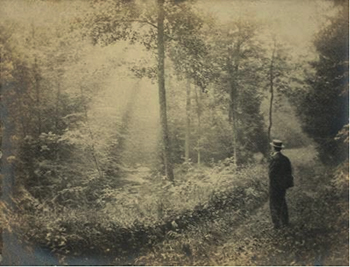 “When he washed his hands he was careful not to let any drop of water fall in a place where it would be in danger of being trampled under foot, for water is the figure of Holy Penitence and it is by the water of Baptism that the soul is cleansed from original sin. He could not walk upon stones without reverence and awe, for love of Him Who is the keystone of the corner. He would not let them cut all the wood from a tree to light the fire, for love of Him Who wrought our salvation on the wood of the Cross.
“St. Francis, then, lived continuously in the midst of a forest of symbols and the substantial reality of this symbolism was so living that by it he regulated all his actions; just as we conform our attitude to what things seem to us to be, St. Francis saw their actual nature in them and conformed his actions to it. From this comes that interior and exterior joy that he drew unfailingly from all things; in touching them or in contemplating them it was as though his spirit was no longer upon earth but in Heaven.”

The medieval view of Francis talking to animals was warped by modern sentimentalism
Really, he was a profoundly serious man. When little things seemed of import to him, it was because, like the archetypal hermit, he understood “the highest reasons for which each thing was created and its sacred, august character.”
In our days when seriousness has become a pariah and man seems to have forgotten the true nature of the universe – that it is a complement to the spiritual and reflects the qualities of God – passages like these are more necessary than ever. Never before have so many men been literate, and yet been unable to read the book of Creation…
Étienne Gilson: “St. Francis’s influence upon Bonaventure had not been only moral: it had in fact penetrated to the very depths of his intellect. It was Francis who taught the Doctor of the University of Paris, with all his learning, the lesson of total adherence to God by the savor of contemplation which Bonaventure was to make the directive principle of his whole doctrine.
“St. Francis’s whole effort was to live in a sort of permanent contact with the presence of God; at first he sought it in solitude, and St. Bonaventure was right when he said that the eremitical life was one of the constituent elements of the Franciscan ideal. But this mystical experience, reserved at first for certain extraordinary moments in exceptional solitude, did in the end become a kind of habit in him.
After descending from Mount Alvernia Francis saw all creation with the eyes of God
“Of what nature were these heavenly joys? … They must have been of incomparable sweetness, since he never allowed any task, however urgent, to interrupt them: and we know that once he passed through Borgo San Sepolchro utterly unaware of the crowd that thronged about him. The culminating point of these mentis excessus [mental disorder] was reached in the solitude of Mount Alvernia, where St. Francis saw God and himself under the appearance of a twofold light, and whence he returned bearing the stigmata impressed in his flesh by the six-winged Seraphim.
“When contemplation rises to this degree of perfection, it acts like a real force with effects immediately perceptible: the contemplative who comes back from these celestial regions to life among men, comes back with virtues beyond the human, he passes in the midst of things as an angel might pass: radiating extraordinary forces, seeing into what is fundamental in beings, entering into communion through the wrappings of matter with whatever of divine lies hid in the heart of each.
“Think first of the forces: an indiscreet bishop loses the use of his tongue when he comes to interpret the prayer of St. Francis; an abbot for whom St. Francis has agreed to pray feels himself penetrated almost beyond his bearing by a glow and a sweetness for which there is no name: Birds, beasts, plants, the very elements obey him, for he enters into relations with them by virtues which are no t to be acquired in any purely human condition.
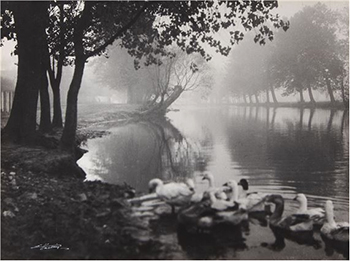
In nature he contemplated its symbolism reflecting the goodness of God
“Ecstasy, of course, is not exactly a transient experience of the Beatific Vision as the elect will possess in eternity, but most certainly it is in our human experience the one thing that comes closest to it. It implies a sort of suspension of the soul, detaching it in some measure from the body and by that very fact conferring upon it the virtues of action and knowledge that belong to a spirituality purer than ours.
“Because he had just experienced an almost total liberation of his soul from his body, because he had just made almost immediate contact with the first Type of all things, the man who came down from Alvernia could penetrate the sense of creatures, and decipher their secret without difficulty. Even if he lost for a time the immediate contact with the Divine Presence, he yet remained a man illumined, divining God in things, even when he no longer possessed Him.
“Hence the endlessly springing fountain of symbols or rather the permanent transfiguration of the universe in which he saw, not fragments of matter or beings deprived of knowledge, but precious images of God. Having touched God, St. Francis could discover His presence where ordinary mortals were, and could only be, unmindful of it.
“In those Middle Ages with their passion for symbolism …. St. Francis appears as an inventor; it was because he had rediscovered the first source from which all symbols flow that he was able to create while others repeated, that he was able especially to see the deepest sense of beings in their symbolical significance.
“His thirteenth-century biographers well saw what a distance there was between the allegories seen, lived and loved by St. Francis and the mass of cliches deposited by tradition in the formulas of the Lapidaries and Bestiaries of the time. Celano not only points out how original and spontaneous was the art with which St. Francis read the meaning of things, he also gives us the reason: St. Francis was already free of this world, he might enjoy the liberty reserved by Beatific Glory for the Children of God.
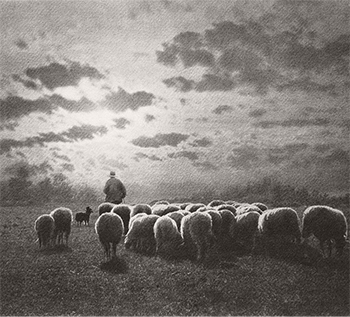
Above all creatures he loved the lamb, symbol of Lamb of God who sacrificed Himself for sinners
“Radical as it was, his contempt of the world had nothing of that sombre hatred with which certain ascetics felt called upon to color it. On the contrary, we can say that the more he despised the world the more he loved it: In a sense he used it as a field of battle against the princes of darkness, but in another he saw in it the clear mirror of the goodness of God. In each one of the works of the Lord he recognized the hand of the Artist and his soul was filled with joy: Everything that seemed to him good shouted in his ears the goodness of God; that is why seeking everywhere his Well-Beloved in the traces of Him that remained in things, he used all things whatsoever as steps to mount to Him.
“From this comes that unique love he bore to things, speaking to them, exhorting them to bless God, treating them with the respect and the tenderness merited by their high dignity as images of their Creator. Above all creatures he loved lambs because they were immediate symbols of Jesus Christ, but he loved likewise the sun for its beauty and fire for its purity.
For Francis the world was a forest of symbols for the man who knows how to contemplate God in nature
“St. Francis, then, lived continuously in the midst of a forest of symbols and the substantial reality of this symbolism was so living that by it he regulated all his actions; just as we conform our attitude to what things seem to us to be, St. Francis saw their actual nature in them and conformed his actions to it. From this comes that interior and exterior joy that he drew unfailingly from all things; in touching them or in contemplating them it was as though his spirit was no longer upon earth but in Heaven.”
Posted March 16, 2025



______________________
______________________
 |
 |
 |