International Affairs
 |
 |
 |
 |
 |
 |
 |
Iran Warns, ‘No Point’ in U.S. Deal
if Israel Remains Unrestrained
- Iran’s parliament speaker warns diplomacy with the U.S. is meaningless if Israel faces no constraints.
- An Israeli airstrike on Beirut killed three people, heightening regional tensions.
- Tehran demands a full ceasefire in Lebanon and an end to Israeli operations as conditions for any deal.
- Trump called Netanyahu “a very difficult guy” and said Israel owes gratitude to American diplomacy.
- A U.S.-Iran agreement expected Friday in Geneva faces collapse over unmet demands and fresh hostilities.
The strike hit the Ghobeiry area of the Lebanese capital, which Israel’s military described as a “command center belonging to the Hezbollah terrorist organization in Beirut.” Israel called it a “precise strike” targeting operatives allegedly planning attacks against Israeli citizens.
Diplomacy on a knife’s edge
In a statement carried by Iranian state media, Ghalibaf said, “The Zionists’ aggression against the southern suburb once again demonstrated that the US either lacks the will to uphold its commitments or lacks the ability to do so.”
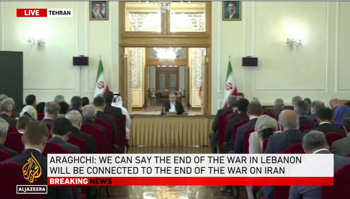
Iran’s Minister of Foreign Affairs Abbas Araghchi announcing the Memorandum of Understanding
Military officials reinforced the message. Brigadier General Mohammad Jafar Asadi, deputy commander of Iran’s Khatam al-Anbiya Central Headquarters, said the attack on Beirut “will not go unanswered.”
Conditions for any agreement
Iranian lawmakers made clear what Tehran expects. Ebrahim Rezaei, spokesperson for the Iranian parliament’s Foreign Policy and National Security Committee, warned American negotiators directly: “If you seek an agreement or understanding, you must discipline the Zionist regime. If this rabid dog is not controlled, it will bite your leg before the ink is dry on the agreement.”
The latest developments come amid intensive Pakistani mediation efforts to secure a Memorandum of Understanding between the United States and Iran. Among Tehran’s terms is a demand for a full ceasefire in Lebanon and an end to Israel’s broader military operations across the region.
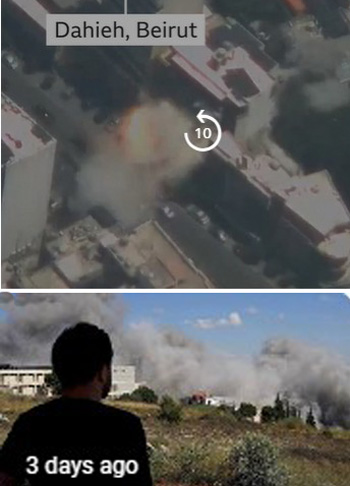
Hours after the US & Iran agreed upon a cease-fire, Israel bombarded Beirut, top; it continues, bottom
Meanwhile, President Donald Trump has not hidden his frustration with Israeli Prime Minister Benjamin Netanyahu. In a phone interview with The New York Times, Trump called Netanyahu “a very difficult guy” and argued Israel should be grateful for American diplomacy. “Because if Iran had a nuclear weapon, Israel wouldn’t be around for two hours,” Trump said.
The agreement, expected to be signed Friday in Geneva, would reopen the Strait of Hormuz and lift the U.S. naval blockade of Iranian ports. But the road to that signing remains treacherous. As Luxembourg’s foreign minister Xavier Bettel noted with dry understatement: “It’s a long time till Friday.”
Iran’s deputy foreign minister, Kazem Gharibabadi, has set clear conditions before entering 60 days of technical negotiations. These include lifting the naval blockade, ending military operations, and releasing billions in frozen Iranian funds. A U.S. official immediately rejected the financial demand, telling CNN: “This is completely not true. This is a pay for performance deal and no frozen funds will be released without the Iranians implementing their commitments.”
The standoff reflects the immense stakes involved. With the Strait of Hormuz closed since early March, global energy markets have been in turmoil. Oil prices have surged, and European leaders from France, Germany, Italy and the United Kingdom have called for “urgent reopening” with unconditional freedom of navigation.
Right now, Iran has its finger on the trigger, Israel shows no signs of halting its Lebanon campaign, and American officials scramble to salvage months of painstaking negotiations.
Read other articles by Cassie B. here
Posted June 17, 2026



______________________
______________________
 The Return of the Muslim Threat |
 War, Just War |
 In the Wake of the Crusades |
 The Universal Republic Blessed by the Conciliar Popes |
 Vade Mecum on the Errors of Nazism |
 Curious Affinities Between the Thinking of John Paul II and Marxism |