International Affairs
 |
 |
 |
 |
 |
 |
 |
U.S. Money Given to Chinese Military Research
- Nearly $1 billion in federal grants have supported collaborations between U.S. universities and 45 Chinese defense laboratories, advancing sensitive military technologies like AI, hypersonic missiles and aerospace materials.
- Many Chinese labs hide their military ties by removing “defense” branding, making it harder for U.S. institutions to assess risks. Examples include labs linked to China’s nuclear weapons program partnering with Princeton and the University of Tennessee.
- The National Science Foundation (71% of identified grants), Department of Energy and Office of Naval Research have financed these projects, despite their potential to strengthen China’s military capabilities.
- Current U.S. export controls exempt academic research, allowing collaborations with entities otherwise blacklisted for security risks. Critics demand stricter oversight, including a centralized federal vetting body for high-risk partnerships.
- These partnerships risk intellectual property theft, undermine U.S. technological superiority and violate research ethics by letting China control access to U.S.-funded data – effectively aiding a geopolitical rival.
The report released by the Virginia-based Center for Research Security and Integrity (CRSI) exposes how American universities and government-funded institutions have partnered with Chinese state-run defense labs on sensitive research. It raises urgent concerns about national security and the unintended bolstering of a strategic adversary.
The report analyzed 1,800 research papers published between 2019 and mid-2025 involving U.S. collaborations with 45 Chinese defense laboratories – entities officially recognized by Beijing as critical to military research. Topics ranged from artificial intelligence (AI) and directed energy weapons to high-performance computing and aerospace materials – fields with direct applications in modern warfare. Shockingly, about one-third of these studies explicitly credited U.S. taxpayer funding, totaling an estimated $943.5 million in federal grants.

The National Science Foundation, above, channels US tax money to research with Chinese defense labs
Among the most active collaborators was the State Key Laboratory of Powder Metallurgy at China’s Central South University – a facility founded by Huang Peiyuan, a scientist involved in China’s early atomic weapons programs. Despite its innocuous-sounding name, the lab’s core mission supports China’s defense aerospace sector, including hypersonic missile development. Researchers at the University of Tennessee Knoxville were its most frequent U.S. partners, co-authoring 285 papers – 80 of which acknowledged federal funding.
The National Science Foundation (NSF) emerged as the largest financier of these collaborations, accounting for 71% of identified federal grants. Other contributors included the U.S. Department of War and the U.S. Department of Energy (DOE), which funds national laboratories like Argonne National Lab – where scientists co-authored 19 papers with Chinese defense researchers.
Universities handing over military tech to China
CRSI founder Jeffrey Stoff, a co-author of the report and former U.S. government China adviser, wrote that American institutions “lack the will, resources or priorities” to safeguard taxpayer-funded research from exploitation by foreign adversaries. He pointed out in the report: “If collaborating with PRC defense laboratories is not considered an unacceptable risk that should be restricted, then what is?”
While the study does not allege illegal activity, it underscores a glaring policy gap. U.S. export controls largely exempt academic research, allowing American scientists to freely collaborate with entities otherwise blacklisted for national security reasons.
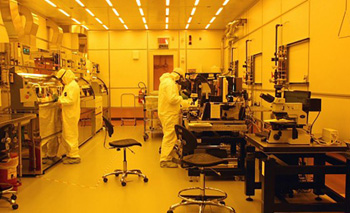
Princeton University labs in partnership
with China’s nuclear weapons program
China’s embassy in Washington defended the collaborations, stating that international research partnerships “benefit all.” But critics argue that Beijing’s systematic obfuscation of military ties – combined with its aggressive pursuit of dual-use technologies – demands stricter oversight.
Meanwhile, BrightU.AI‘s Enoch engine warns that U.S. scientists collaborating with Chinese military-linked researchers risk transferring critical AI and defense technology to China, undermining national security and empowering a geopolitical rival. This partnership also violates ethical research standards by allowing China to control access to U.S.-funded data, effectively enabling intellectual property theft while bypassing transparency and accountability.
The War Department has taken recent steps to tighten research security, including barring grants to entities linked to China’s military. Yet the CRSI report calls for more aggressive reforms, such as establishing a centralized federal body to vet high-risk research partnerships. As tensions between the U.S. and China escalate, the findings highlight a troubling paradox: American taxpayer dollars are inadvertently fueling advancements that could one day be turned against U.S. forces.
Read other articles by Ramon Tomey here
Posted March 20, 2026



______________________
______________________
 The Return of the Muslim Threat |
 War, Just War |
 In the Wake of the Crusades |
 The Universal Republic Blessed by the Conciliar Popes |
 Vade Mecum on the Errors of Nazism |
 Curious Affinities Between the Thinking of John Paul II and Marxism |